
What Diabetes, Kidney Disease, and One Friend’s Story Taught Me About Helping Others
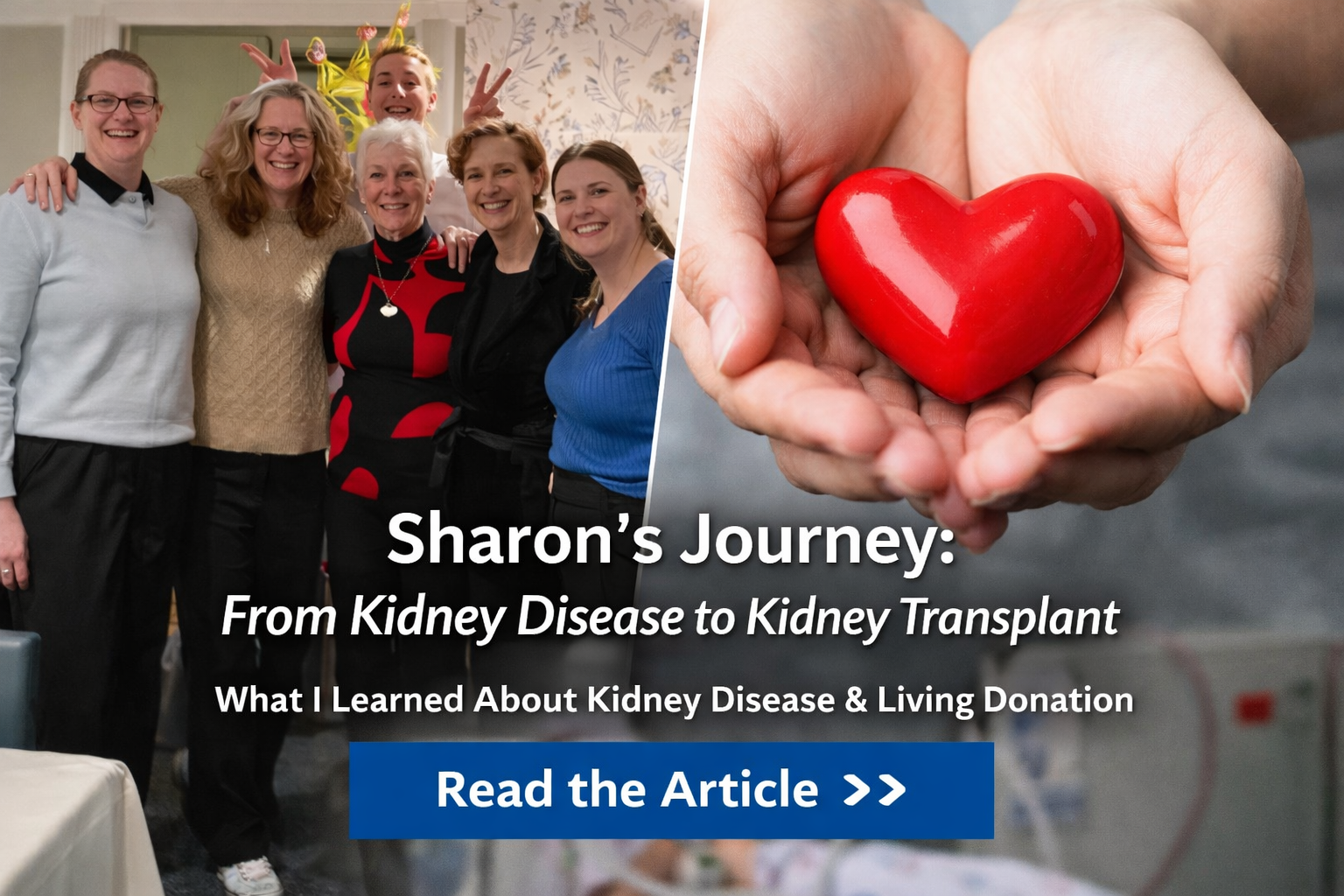
Recently, a friend of mine named Sharon shared something deeply personal. She is dealing with kidney disease, which can develop for a variety of reasons – not just diabetes.
After years of monitoring her health, her kidneys have declined to the point where she is now waiting for a kidney transplant.
Like many people in this situation, Sharon’s next chapter may include dialysis while she searches for a living kidney donor.
If you’d like to read her story, you can see it here:
https://www.nkr.org/SNW275/Card
Her situation caused me to start learning more about diabetes, kidney disease, and living kidney donation—and what I discovered surprised me.
Kidney Disease Often Affects People Who Look Healthy
One of the biggest misconceptions about kidney disease is that it only affects people who are unhealthy.
That’s simply not true.
Many people who develop kidney failure are:
- Active
- Working full time
- Living normal lives
- Taking good care of themselves
In fact, many people don’t even realize their kidneys are failing until the disease is quite advanced.
Kidney disease can happen for many reasons. Two of the most common causes overall are:
- Diabetes
- High blood pressure
In other cases, the cause is genetic or autoimmune (or factors unrelated to lifestyle), meaning lifestyle alone didn’t create the problem.
Diabetes Is More Complicated Than Most People Think
Many people assume diabetes is purely the result of diet or lack of exercise.
But the reality is more complicated.
Many individuals who develop diabetes:
- Exercise regularly
- Maintain a healthy weight
- Eat well
Yet still develop the disease due to genetics or autoimmune conditions.
Over time, diabetes can damage the small blood vessels in the kidneys, which is why it is the leading cause of kidney failure worldwide.
Why Living Kidney Donation Matters
When someone’s kidneys fail, they generally have two options:
- Dialysis – a machine that filters the blood several times per week
- Kidney transplant
While dialysis can sustain life, a transplant typically offers a much higher quality of life and longer survival.
Unfortunately, there are far more people who need kidneys than there are organs available from deceased donors.
That’s why living kidney donation is so important.
Programs like the National Kidney Registry help connect donors and recipients and even allow something called a paired exchange.
This means:
- Even if you are not a direct match for someone like Sharon
- You may still be able to donate a kidney that helps another person
- Which then triggers a chain of transplants that ultimately helps the intended recipient.
One donor can sometimes help multiple people receive life-saving transplants.
After learning more about the process, I completed my initial registration with the National Kidney Registry to see whether I might be eligible to help as a living donor.
I’m now waiting to learn more about next steps, including whether I might be a match through the process.
To be clear, this doesn’t mean I will necessarily donate. It simply begins the confidential screening process to determine whether someone is a safe and appropriate candidate.
Common Questions About Kidney Donation
When people hear about kidney donation, a few questions immediately come up.
Is it safe?
Living kidney donation has been performed for decades, and donors typically live full, healthy lives with one kidney.
Does it cost the donor anything?
Medical costs for the donation are covered, and programs like the National Kidney Registry provide support resources for donors.
Do you have to be a perfect match?
No. Through paired exchange programs, your kidney may help someone else while still helping the intended recipient.
Is testing confidential?
Yes. The initial donor screening process is private and simply helps you learn whether donation could be possible.
How You Can Help Sharon (or Others Like Her)
There are a few simple ways anyone can help.
1. Share the Story
Sometimes the person who ultimately becomes a donor is someone several degrees away from the recipient.
Simply sharing Sharon’s story increases the chances that the right person learns about it.
2. Learn About Living Donation
If you’re curious, you can learn more or begin the confidential screening process through Sharon’s page:
https://www.nkr.org/SNW275/Card
There is no obligation to donate. It’s simply a way to understand the process.
3. Support People Going Through Kidney Disease
Even if donation isn’t something you can pursue, people facing kidney failure benefit from:
- Emotional support
- Awareness
- Advocacy
- Helping spread the word
Why I’m Sharing This
Before Sharon shared her story, I didn’t realize:
- How common kidney disease is
- How many healthy people are affected
- How important living donors are
Sometimes the most meaningful help we can provide is simply learning, sharing, and supporting someone who needs it.
If Sharon’s story resonates with you, consider reading more or sharing her page.
One conversation, one share, or one person learning about donation could ultimately save someone’s life.

Chris Scherer
Chris is a transformation leader with over 25 years of experience driving significant value and mitigating risks across a broad range of industries and functions. With a track record of generating more than $450 million in savings, he has excelled in both challenging and thriving environments within small businesses, mid-market firms, and Fortune 500 companies. A dual-degree graduate of Thunderbird and ESADE, Chris started his career at Arthur Andersen and progressed through roles from Corporate Audit to Global Human Resources at various Fortune 500 firms. He played a pivotal role in growing AArete, a global management consultancy, where he led initiatives that significantly reduced non-labor costs and improved compliance processes. An advocate for sustainable community initiatives, Chris was a founding member of a nonprofit focused on creating bicycle-friendly communities in New Jersey.