It happens all the time.
You promote a strong performer:
- They deliver results
- They know the work
- They’ve earned trust
It feels like the right decision.
And then something changes.
What Leaders Start to See
After the promotion:
- Decisions slow down
- The team isn’t as aligned
- Issues escalate more often
- Performance becomes inconsistent
In some cases, the person seems hesitant.
In others, they stay too close to the work – and not close enough to leading people.
The Assumption
Most leaders assume:
“They just need more time.”
“They need training.”
“They’ll grow into it.”
Sometimes that’s true.
But often, it misses the real issue.
What Actually Changed
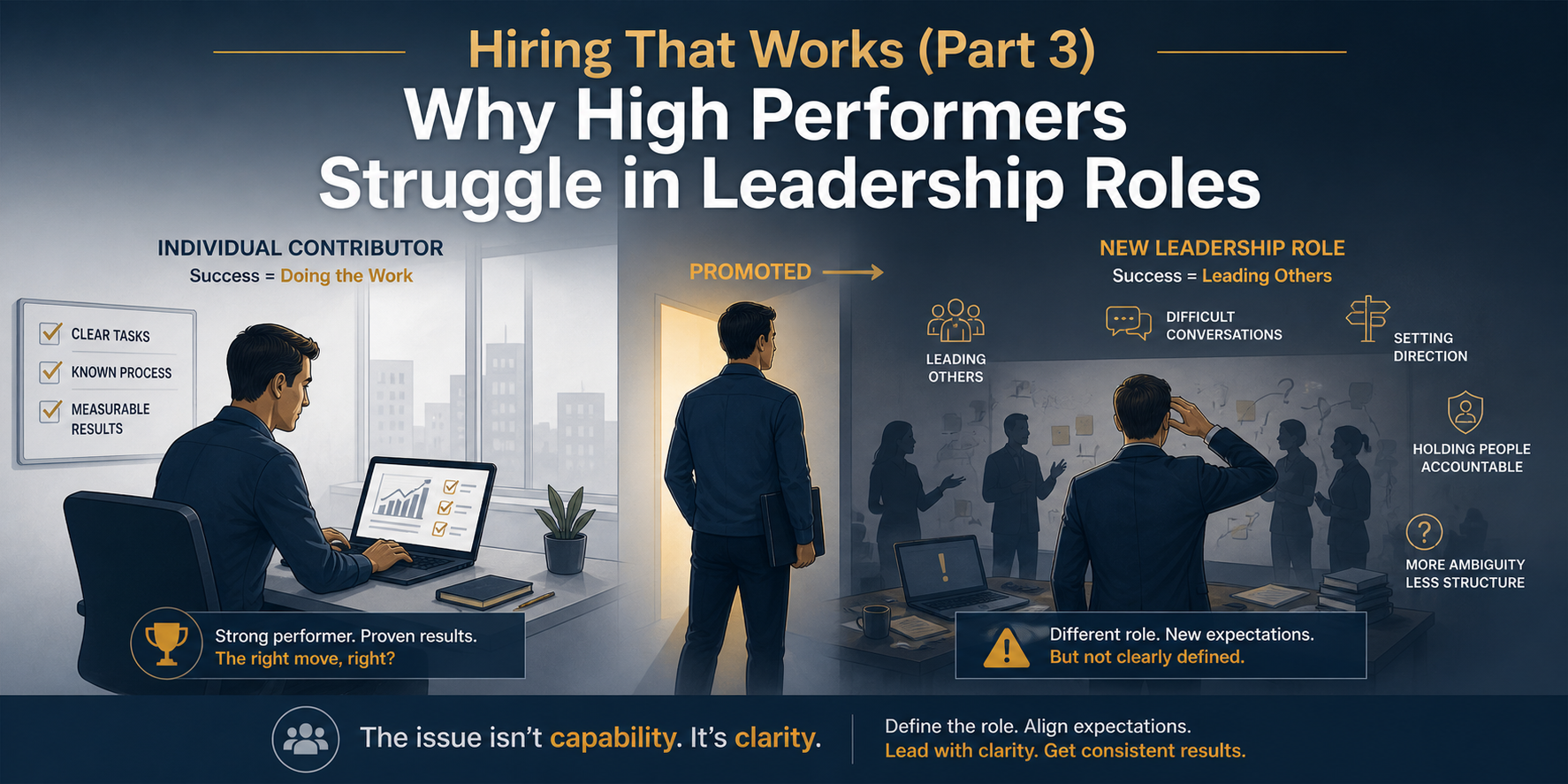
The role changed.
But the expectations didn’t.
As an individual contributor, success meant:
- Doing the work well
- Delivering results personally
As a leader, success requires:
- Making decisions through others
- Managing conflict
- Setting direction
- Holding people accountable
That’s not a step up.
It’s a different role.
Where It Breaks Down
Most organizations don’t clearly define that difference.
So when someone is promoted:
- Expectations are implied
- Behaviors are assumed
- Success is left to interpretation
And the person is left trying to figure it out in real time.
Why Strong Performers Struggle
High performers often struggle because they default to what made them successful:
- Doing instead of leading
- Avoiding conflict
- Waiting for clarity before acting
- Staying in control of the work
Not because they lack capability.
Because the role requires something different – and no one clearly defined it.
The Real Issue
This isn’t a promotion problem.
It’s a definition problem.
Without clear expectations for how the role operates:
- Leadership becomes inconsistent
- Teams feel the friction
- Performance varies
Across the organization.
A Better Way to Approach It
Before promoting someone, ask:
- What does success in this role actually require?
- Where will pressure show up?
- What behaviors will determine success?
When that’s clear:
- Promotions become more predictable
- Leaders operate with confidence
- Teams perform more consistently
Because expectations aren’t assumed.
They’re defined.
What Comes Next
In Part 4:
Why job descriptions don’t reflect how roles actually operate – and how that creates misalignment from the start.
📅 [Schedule a Talent Alignment Session]
Let’s determine whether your leadership roles are clearly defined – or leaving success to interpretation.