“Culture fit” sounds like a good thing.
Most leaders want people who:
- Fit the team
- Align with the company
- Get along with others
- Share similar values
And on the surface, that makes sense.
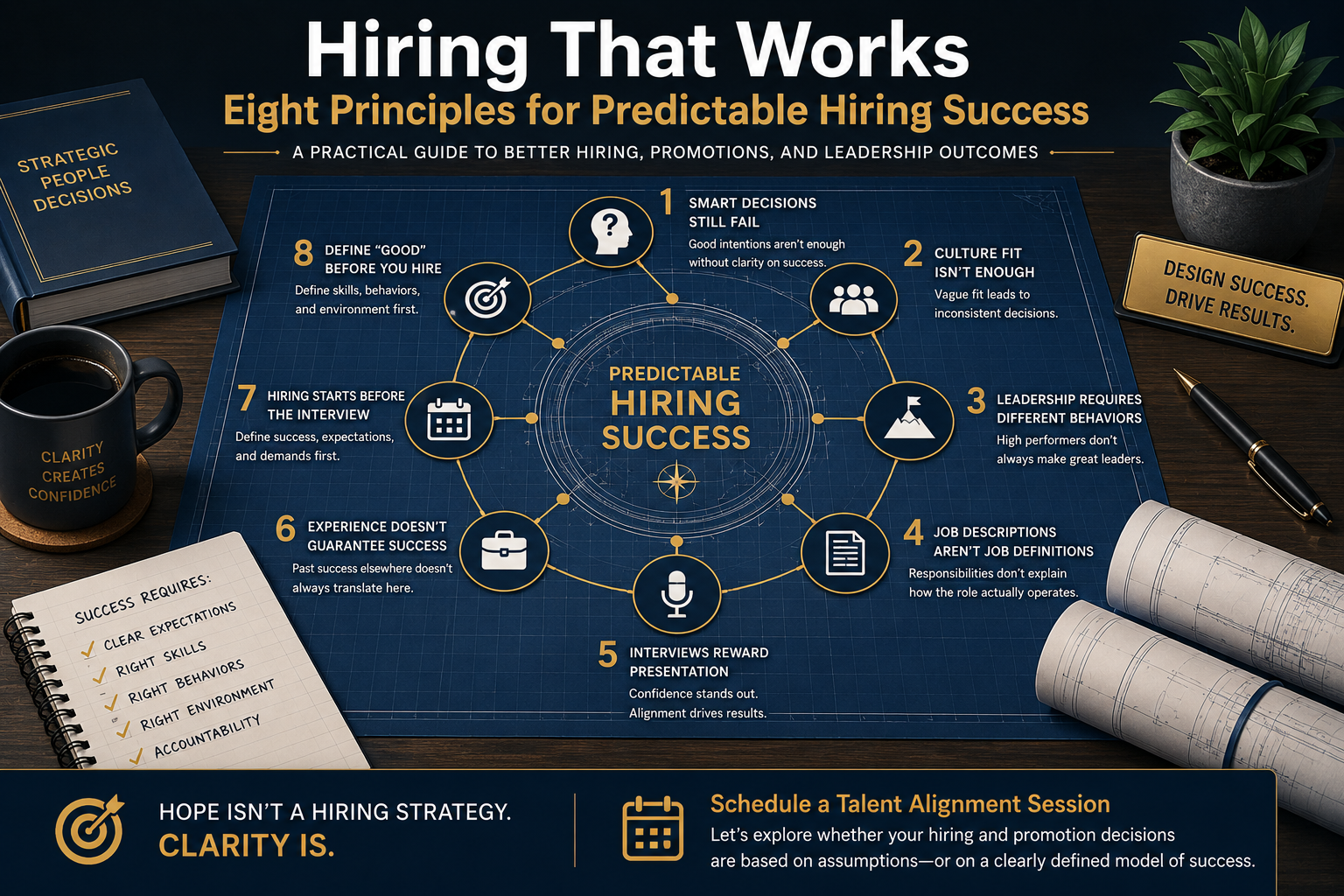
But “culture fit” is one of the most common reasons hiring decisions become inconsistent.
What Leaders Mean by “Culture Fit”
When leaders say “they’re a good culture fit,” they often mean:
- “I liked them”
- “They communicate well”
- “They seem easy to work with”
- “They feel similar to the team”
None of those are bad.
But they’re also not specific.
And they don’t predict performance.
Why “Culture Fit” Breaks Down
The problem isn’t the idea of culture.
The problem is how loosely it’s defined.
Without clarity, “culture fit” becomes:
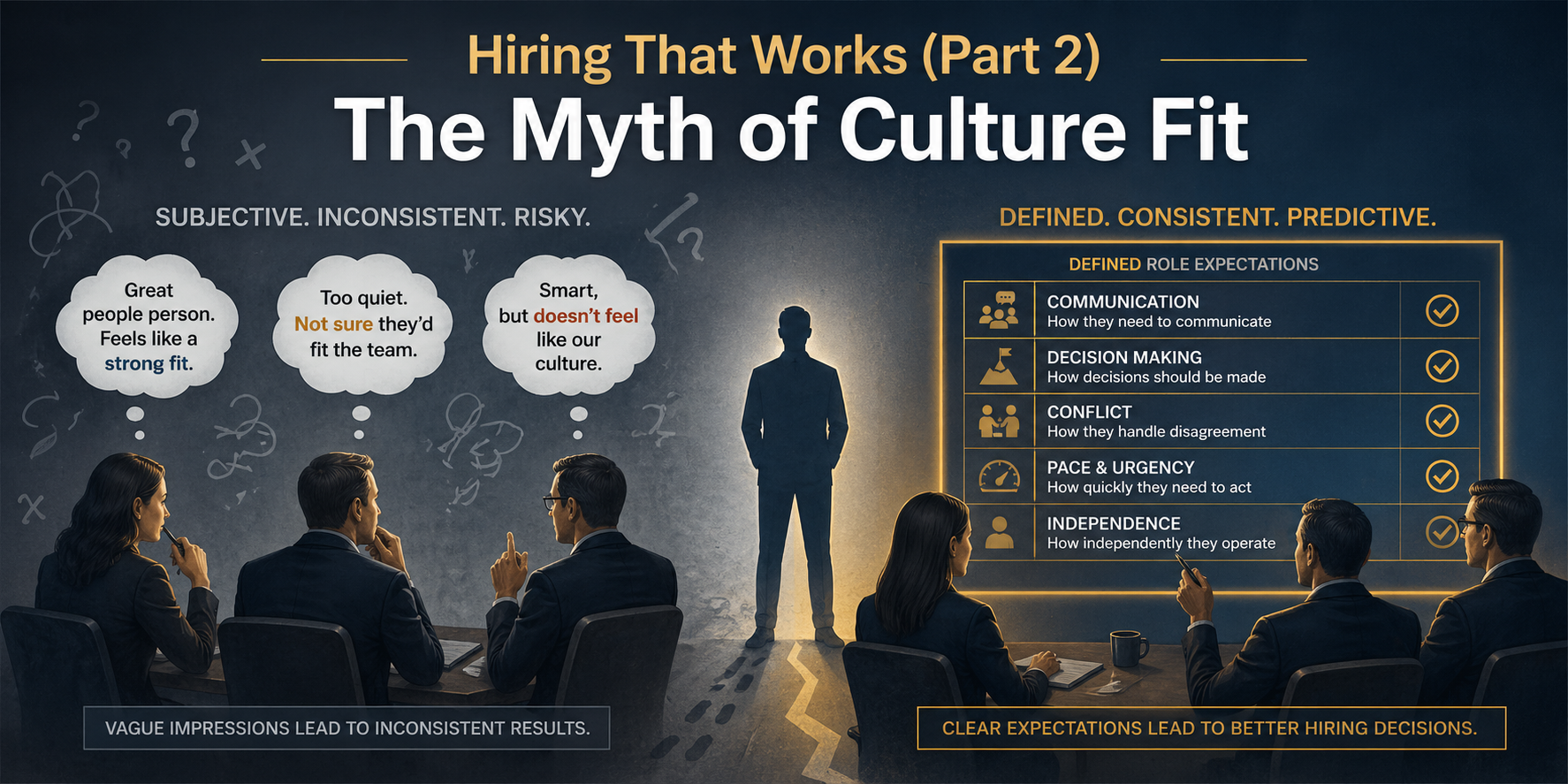
- Subjective
- Inconsistent
- Different for every interviewer
- Influenced by personal preference
Two leaders can interview the same person and come to completely different conclusions—both believing they’re evaluating “fit.”
Where This Shows Up
You’ve likely seen this play out:
- A hire feels like a great fit—but struggles to deliver
- Someone integrates well socially—but avoids difficult conversations
- A team gets along—but performance is uneven
- Strong personalities are labeled “not a fit” when they challenge the group
These aren’t personality problems.
They’re definition problems.
What’s Missing
Most organizations define culture in broad terms:
- Collaboration
- Accountability
- Ownership
- Teamwork
But those words don’t tell you:
- How decisions should be made
- How conflict should be handled
- How quickly people should act
- How independently someone should operate
Without that clarity, hiring decisions default to interpretation.
The Risk Leaders Don’t See
When “culture fit” is vague:
- Teams become too similar
- Necessary tension disappears
- Difficult conversations are avoided
- Performance expectations become uneven
And over time, the organization becomes less effective—not more aligned.
A Better Way to Think About It
Strong organizations don’t hire for “fit.”
They define how the role needs to operate.
That includes:
- How the person needs to communicate
- How they handle pressure
- How they make decisions
- How they interact with others
When those expectations are clear:
- Hiring becomes more consistent
- Teams become more complementary
- Performance becomes more predictable
Because you’re no longer guessing what “fit” means.
You’re defining it.
What Comes Next
In Part 3, we’ll look at a situation many organizations struggle with:
Why high performers often fail when promoted into leadership roles.
📅 [Schedule a Talent Alignment Session]
Let’s determine whether your hiring decisions are based on “fit”—or on clearly defined expectations for success.