Most hiring decisions don’t feel random.
They feel thoughtful.
You review resumes.
You interview candidates.
You get input from others.
You make the best decision you can with the information you have.
And still…
Six months later, something isn’t right.
- The person isn’t performing the way you expected
- The team isn’t responding the way you thought they would
- You find yourself more involved than you planned
- Or worse – you’re quietly questioning the decision
This happens more often than most leaders admit.
And it’s rarely because someone made a careless decision.
The Problem Isn’t Effort
Most leaders put real effort into hiring.
They look for:
- Experience
- Intelligence
- Communication skills
- “Culture fit”
- References and past success
None of those are wrong.
But they’re not enough.
Because they don’t answer the most important question:
What does this role actually require from a behavioral standpoint?
What Gets Missed
Every role has demands that go beyond skills and experience.
Some roles require:
- Driving urgency and pushing decisions
- Navigating ambiguity without constant direction
- Managing conflict directly
- Operating independently without structure
Others require:
- Patience and consistency
- Collaboration and alignment
- Attention to detail
- Following defined processes
Most hiring decisions don’t clearly define these expectations.
Instead, leaders rely on:
- Gut feel
- General impressions
- What worked in the past
- What they personally value
And that’s where things begin to break down.
Why It Feels Like a “Good Hire” at First
Early on, most hires look promising.
They communicate well.
They’re engaged.
They bring energy.
But over time, the role begins to demand things that weren’t clearly defined:
- How decisions are made
- How pressure is handled
- How conflict is addressed
- How independently the person operates
If those expectations don’t match how the person naturally works, friction builds.
Not because they’re incapable.
But because the role and the behavior required were never clearly aligned.
Why This Matters More in Leadership Roles
This problem becomes even more visible when promoting internal talent.
You take someone who:
- Performed well in their role
- Was reliable
- Delivered results
And you elevate them.
Then something changes.
- The team doesn’t respond the same way
- Decisions slow down
- Communication becomes inconsistent
- Performance becomes uneven
The assumption is often:
“They need more training.”
But more often, the issue is this:
The behavioral demands of the role changed – but were never clearly defined.
The Real Issue
Hiring and promotion decisions don’t fail because leaders don’t care.
They fail because the role itself is not clearly defined in a way that predicts success.
Without that clarity:
- Interviews evaluate the wrong things
- Decisions rely on instinct
- Expectations shift after the hire
- Performance becomes inconsistent
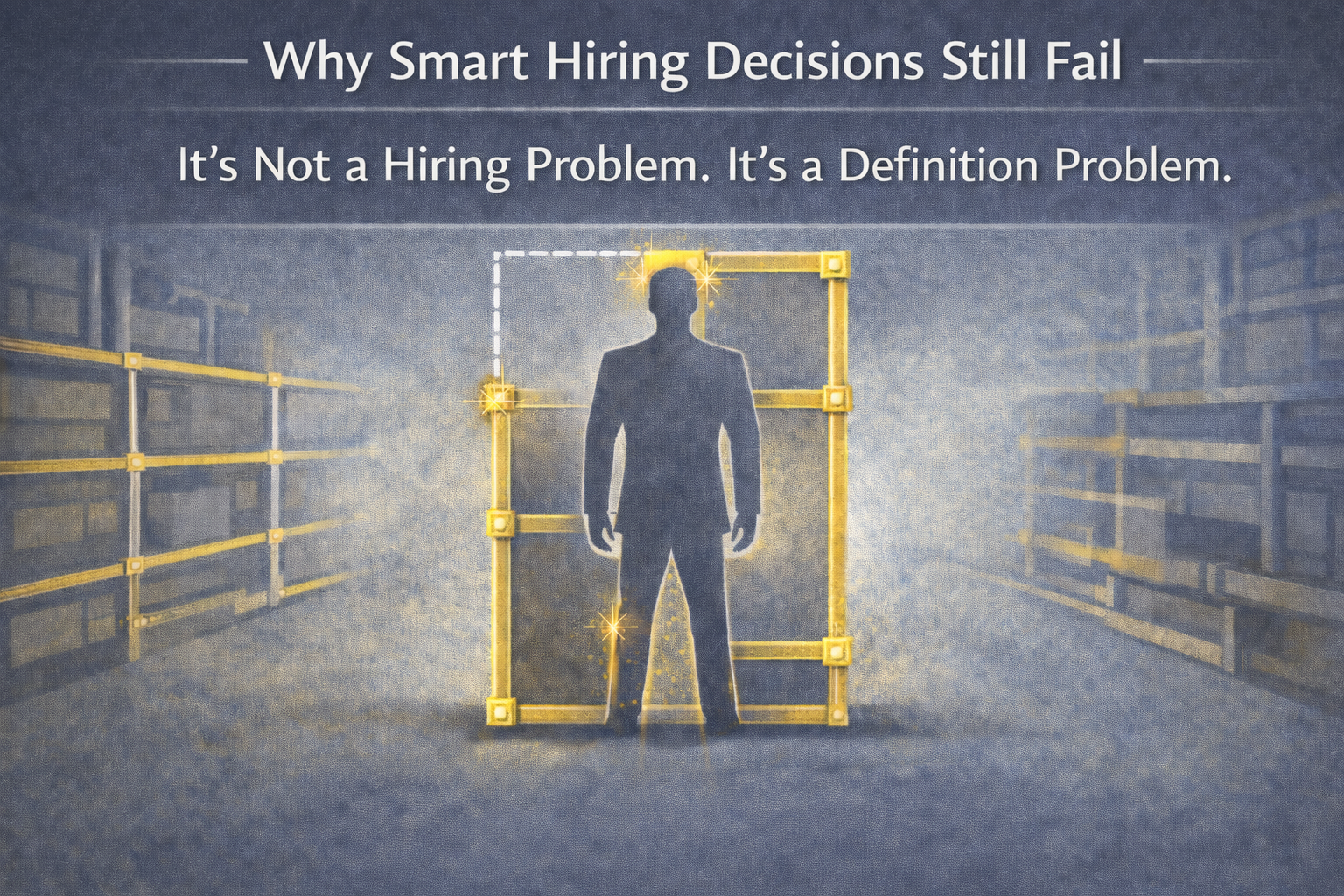
It’s not a hiring problem.
It’s a definition problem.
A Different Way to Think About It
Before evaluating candidates, strong organizations step back and ask:
- What does success in this role actually require?
- How does this person need to operate day-to-day?
- Where will pressure show up?
- What behaviors will determine success – or failure?
When that becomes clear:
- Hiring decisions improve
- Promotions become more predictable
- Teams operate with less friction
Because expectations are no longer assumed.
They’re defined.
What Comes Next
In Part 2, we’ll look at one of the most common traps in hiring:
Why “culture fit” often leads to inconsistent results – and what leaders actually mean when they say it.
📅 [Schedule a Talent Alignment Session]
Let’s determine whether your hiring and promotion decisions are aligned to what the role actually requires.