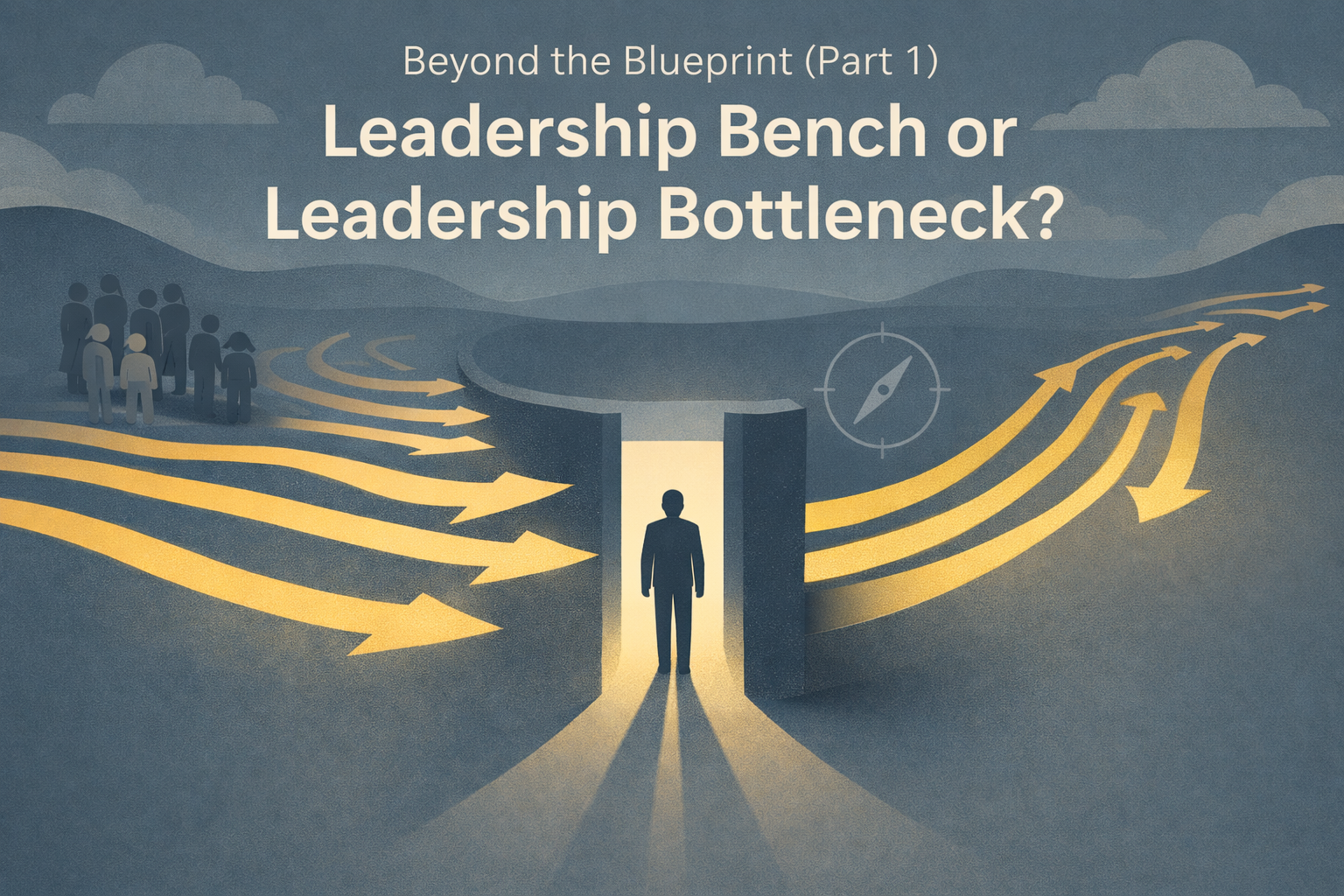
Most leadership teams feel a sense of relief when the fires are finally out.
The numbers stabilize.
The obvious inefficiencies get addressed.
Customers stop complaining as loudly.
From the outside, it looks like progress.
But inside the organization, a different pattern often starts to emerge.
Decisions slow down.
Everything funnels back to a few leaders.
Teams wait instead of act.
Growth feels harder than it should.
At this stage, the problem is no longer process or strategy.
It’s leadership capacity.
The Hidden Shift Leaders Often Miss
Early in a company’s life, leaders are supposed to be involved in everything.
That’s how momentum is created.
But once the business stabilizes, the rules change.
What worked to get the fires under control becomes the very thing that limits progress next.
Common symptoms show up quietly:
-
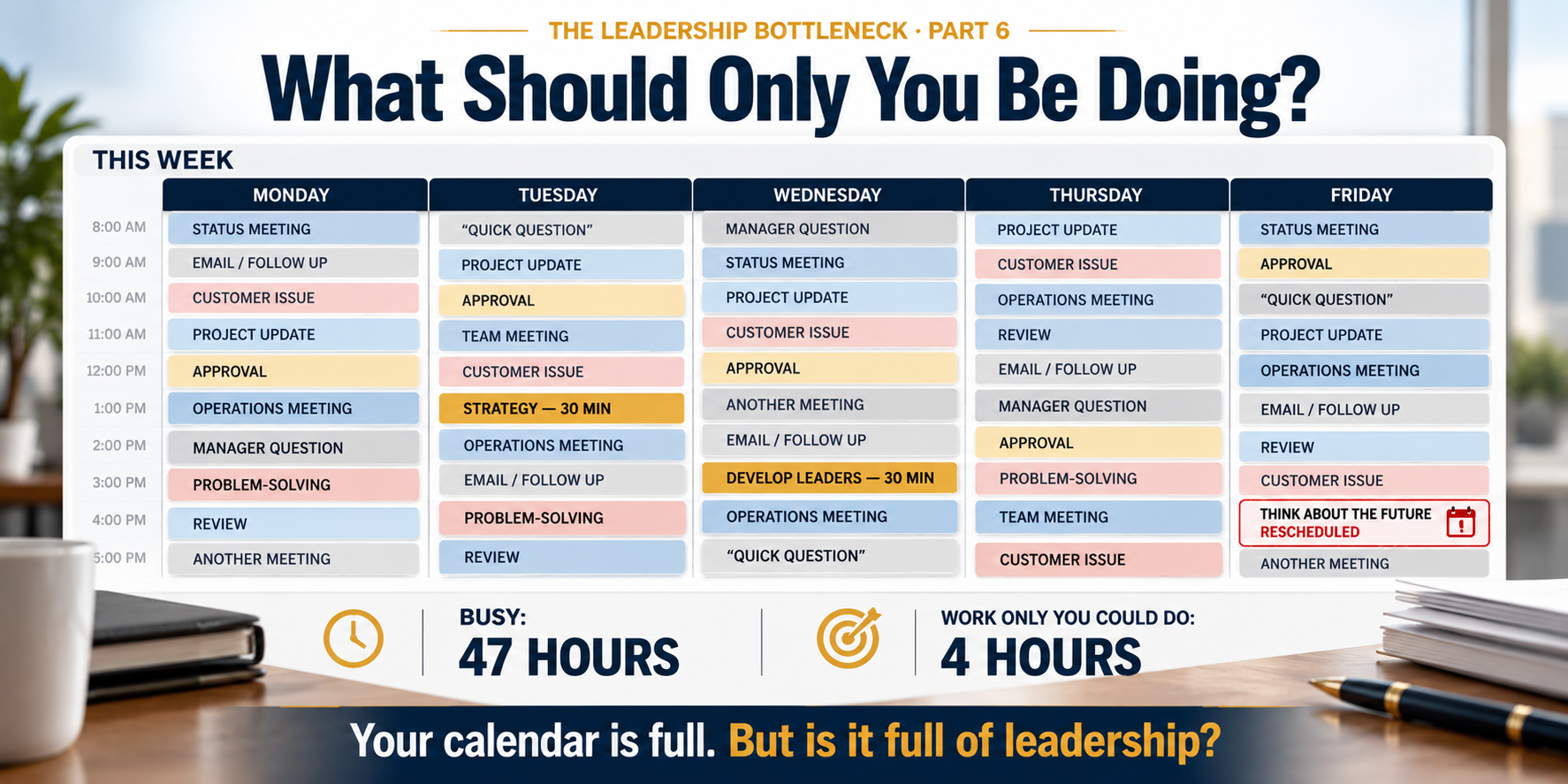
Leaders are in every important decision — even routine ones
-
Teams escalate instead of resolving
-
Meetings multiply, but outcomes don’t
-
Good people hesitate because authority isn’t clear
From the top, it feels like:
“If I don’t stay close, things will slip.”
From the rest of the organization, it feels like:
“We’re waiting to be told what to do.”
That’s not a people problem.
That’s a leadership bottleneck.
What a Leadership Bottleneck Actually Is
A leadership bottleneck forms when:
-
Decision-making concentrates at the top
-
Authority hasn’t kept pace with responsibility
-
Leaders are carrying work the organization should be capable of handling
The business isn’t failing.
It’s constrained.
And the constraint isn’t effort, talent, or intent.
It’s capacity.
Specifically: the capacity of leaders to scale decision-making, ownership, and judgment beyond themselves.
Why Hiring Doesn’t Fix This (Yet)
The instinctive response is often:
“We just need to add people.”
So leaders hire:
-
More managers
-
More specialists
-
More support roles
But without addressing the bottleneck:
-
Decisions still route upward
-
Accountability remains unclear
-
New roles add coordination cost instead of relief
Headcount increases.
Speed does not.
That’s because capacity isn’t created by titles or org charts.
It’s created by readiness, clarity, and trust.
This Is Where Leadership Bench Comes In
A leadership bench is not a succession plan.
It’s not a training program.
And it’s not about potential someday.
A leadership bench exists when:
-
Multiple people can make sound decisions at the right level
-
Ownership is clear and respected
-
Leaders can step back without things falling apart
In other words:
The organization can move without waiting on a few individuals.
Without a bench:
-
Leaders become the throughput constraint
-
Execution slows even when strategy is sound
-
Growth plateaus without an obvious cause
With a bench:
The Real Risk of Ignoring This Stage
When leadership bottlenecks go unaddressed, organizations often experience:
Ironically, this happens after things look “fixed.”
Which is why it’s so often missed.
The business didn’t break.
It just stopped moving.
What Comes Next
In Part 3 of Beyond the Blueprint, we’ll address the most common mistake leaders make at this stage:
Trying to solve a leadership bottleneck by adding people — instead of increasing leadership readiness.
We’ll explore:
-
Why new roles often create more drag
-
How accountability gets diluted
-
And what actually needs to change for growth to resume
📅 [Schedule a Strategy Alignment Session]
If your business feels stable but stuck, let’s identify whether leadership capacity—not strategy—is the real constraint.