Costs are rising again.
Fuel. Labor. Materials. Transportation.
For many leaders, it feels like a problem they just finished solving.
And now it’s back.
The instinct is to react:
Raise prices. Cut costs. push for efficiency.
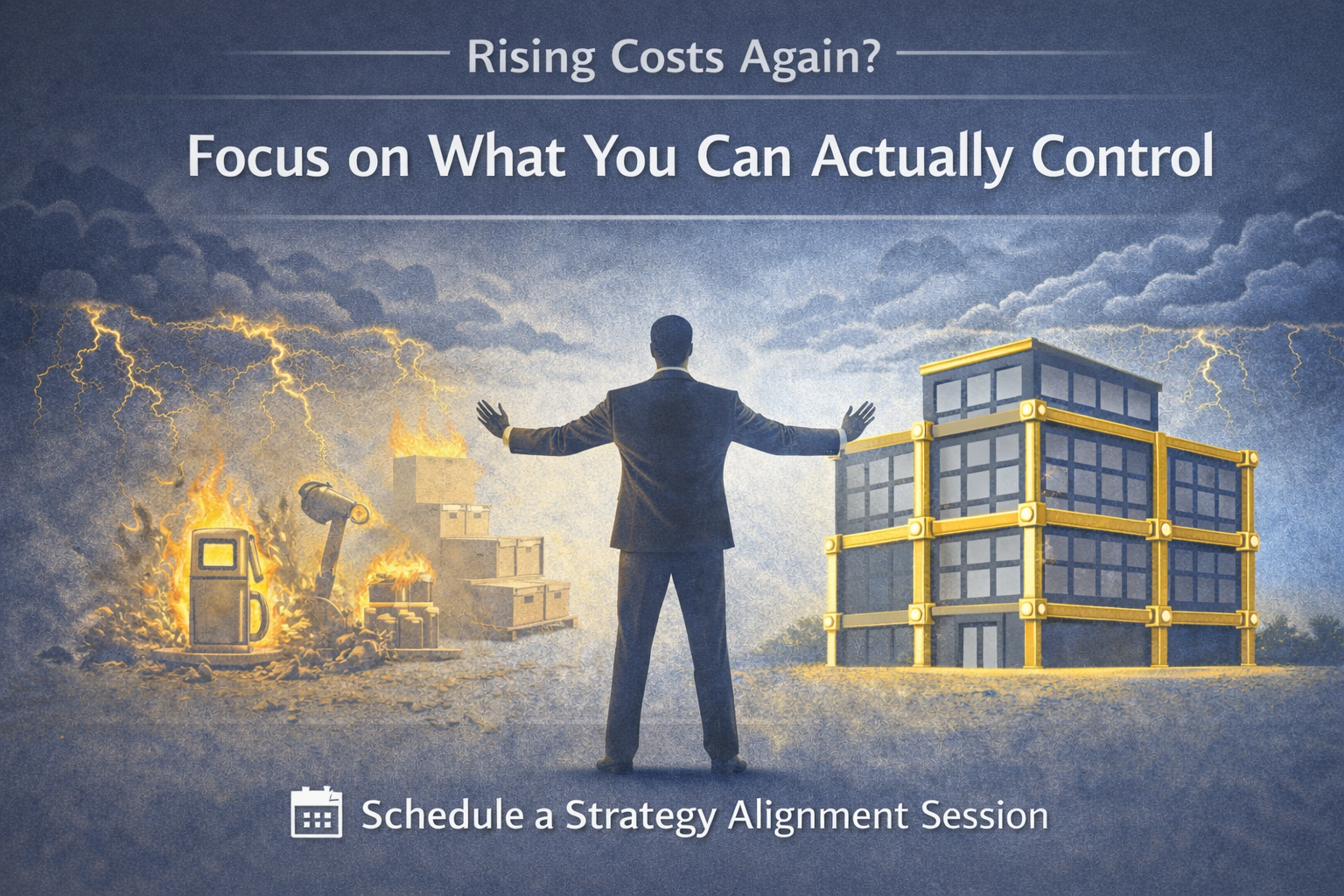
But most of what’s driving these increases is outside your control.
And reacting to what you can’t control often makes the problem worse.
The real question is different:
What can you actually control right now?
The Illusion of Control
When costs rise, leaders often try to manage:
- Energy prices
- Labor markets
- Supplier pricing
- Macroeconomic shifts
But these are not controllable variables.
They are conditions.
Trying to “solve” them leads to:
- Reactive decisions
- Short-term fixes
- Internal strain
- Customer friction
And often, unintended consequences.
Where Control Actually Exists
The organizations that navigate cost pressure best don’t try to control the environment.
They focus on how their business operates within it.
That starts with four areas:
1. How Work Is Designed
Cost rarely shows up where it starts.
It shows up in:
- Rework
- Delays
- unclear handoffs
- duplicated effort
When costs rise externally, these internal inefficiencies become more expensive.
2. How Decisions Are Made
As pressure increases, so does escalation.
If decisions are unclear or concentrated:
- Bottlenecks form
- delays increase
- costs expand
Clarity in decision ownership reduces friction immediately.
3. How Relationships Are Structured
Most organizations underestimate this.
Cost pressure exposes weak alignment with:
- Vendors
- Customers
- Internal teams
Without clear expectations:
- Vendors protect themselves
- Customers push for exceptions
- Employees absorb the tension
Strong agreements – with defined roles, expectations, and accountability – reduce volatility.
4. How Pricing Is Framed
Pricing is not just about increasing rates.
It’s about aligning:
- Value
- expectations
- delivery
When those are misaligned, price increases create friction instead of margin.
This Is a Stress Test – Not a Crisis
Rising costs feel disruptive.
But they rarely create new problems.
They expose existing ones.
Where systems are weak:
- Costs accelerate
- margins compress
- complexity increases
Where systems are strong:
- pressure is absorbed
- decisions remain clear
- execution holds
The difference is not luck.
It’s design.
A Practical Perspective
This is not about reacting faster.
It’s about operating with clarity.
You may not control:
- fuel prices
- labor trends
- global supply chains
But you do control:
- how work flows
- how decisions are made
- how expectations are set
- how accountability is enforced
That’s where margin resilience comes from.
Final Thought
This isn’t the first time costs have risen.
And it won’t be the last.
The organizations that navigate this period successfully won’t be the ones that try to control the external environment.
They’ll be the ones that have built systems strong enough to operate within it.
📅 [Schedule a Strategy Alignment Session]
Let’s determine what cost pressures are outside your control – and where your margins are still exposed.