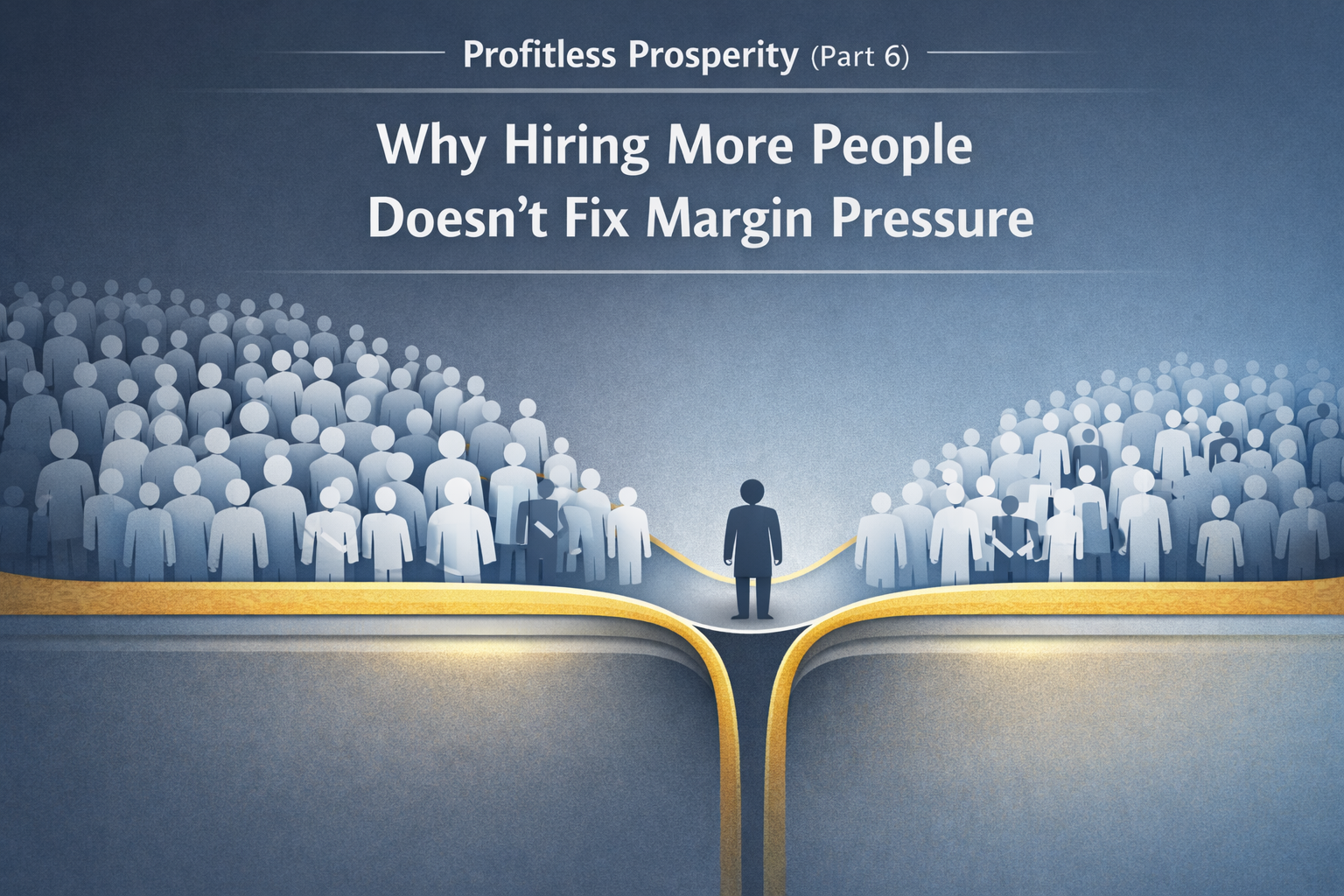
Why Hiring More People Doesn’t Fix Margin Pressure
When margins tighten and demand continues, most leaders reach for the same lever:
Hire.
Add capacity.
Add support.
Add management layers.
Add specialists.
It feels proactive.
It often makes the problem worse.
The Illusion of Capacity
When revenue grows, organizations expand.
More clients.
More projects.
More transactions.
But growth rarely scales evenly.
Decision-making remains concentrated.
Escalations flow upward.
Accountability blurs across new roles.
The structure gets larger.
The bottleneck stays the same.
And payroll increases faster than productivity.
Why This Accelerates Profitless Prosperity
Hiring under margin pressure often creates three compounding effects:
1️⃣ Coordination Costs Rise
Each new hire increases:
- Communication complexity
- Management oversight
- Cross-functional dependency
- Rework risk
Without redesigned decision rights, you multiply friction.
2️⃣ Leadership Attention Fragments
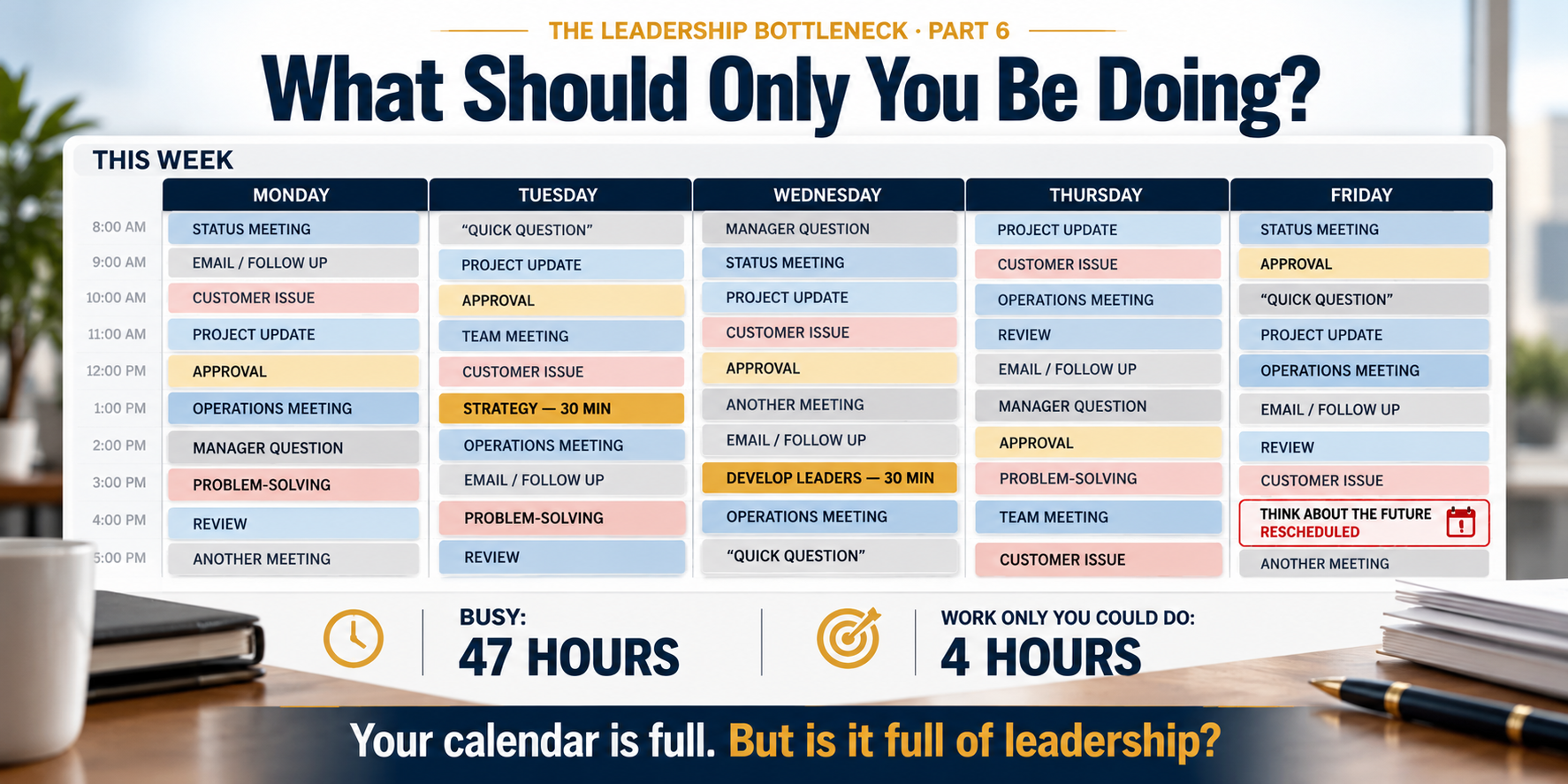
Mid-market CEOs especially experience this:
More people → more meetings → more issues → more exceptions.
Strategic focus erodes.
Margin discipline weakens.
Execution slows.
3️⃣ Cultural Expectations Shift
When hiring becomes the solution to overload:
- Accountability diffuses
- Escalations increase
- “That’s not my role” appears
- Internal negotiation replaces external performance
Cost pressure intensifies – not because labor is bad, but because design is weak.
The Real Constraint Is Leadership Capacity
Leadership capacity is not measured in headcount.
It is measured in:
- Clarity of decision authority
- Defined role ownership
- Escalation boundaries
- Governance consistency
- Accountability enforcement
If these are unclear, adding people amplifies instability.
If they are clear, hiring becomes strategic – not reactive.
The Hard Question Leaders Avoid
Before hiring, ask:
- What decisions are currently bottlenecked?
- Where are we tolerating ambiguity?
- Which problems are structural, not staffing-related?
- Are we solving overload – or avoiding redesign?
The most expensive hires are the ones made to compensate for poor leadership architecture.
What Sustainable Growth Looks Like
Organizations that protect margin while scaling:
- Redesign decision rights before adding layers
- Clarify role boundaries explicitly
- Eliminate rework before expanding headcount
- Tie hiring to measurable productivity outcomes
- Preserve strategic leadership time intentionally
They grow with discipline.
Not volume.
Why This Matters Now
As wage pressure builds and revenue expands, many businesses will experience growth.
But without redesign, that growth will be absorbed by payroll, friction, and management overhead.
That is profitless prosperity in its purest form:
Revenue rising.
Complexity expanding.
Margins thinning.
Leadership capacity – not labor availability – determines which outcome you experience.
What Comes Next
In Part 7, we’ll close the series by addressing the core discipline that ties all of this together:
Why margin resilience is ultimately a leadership governance issue – not a financial one.
📅 [Schedule a Strategy Alignment Session]
Let’s determine whether your growth is constrained by staffing – or by leadership design.