---
title: "Profitless Prosperity (part 4): Becoming Non-Discretionary in a Discretionary World"
description: Recessions reward essential businesses. Learn how to reposition your organization as non-discretionary before margin pressure rises.
image: https://www.cxoaccelerator.com/hubfs/20260216%20Prosperity%20part%204.png
---
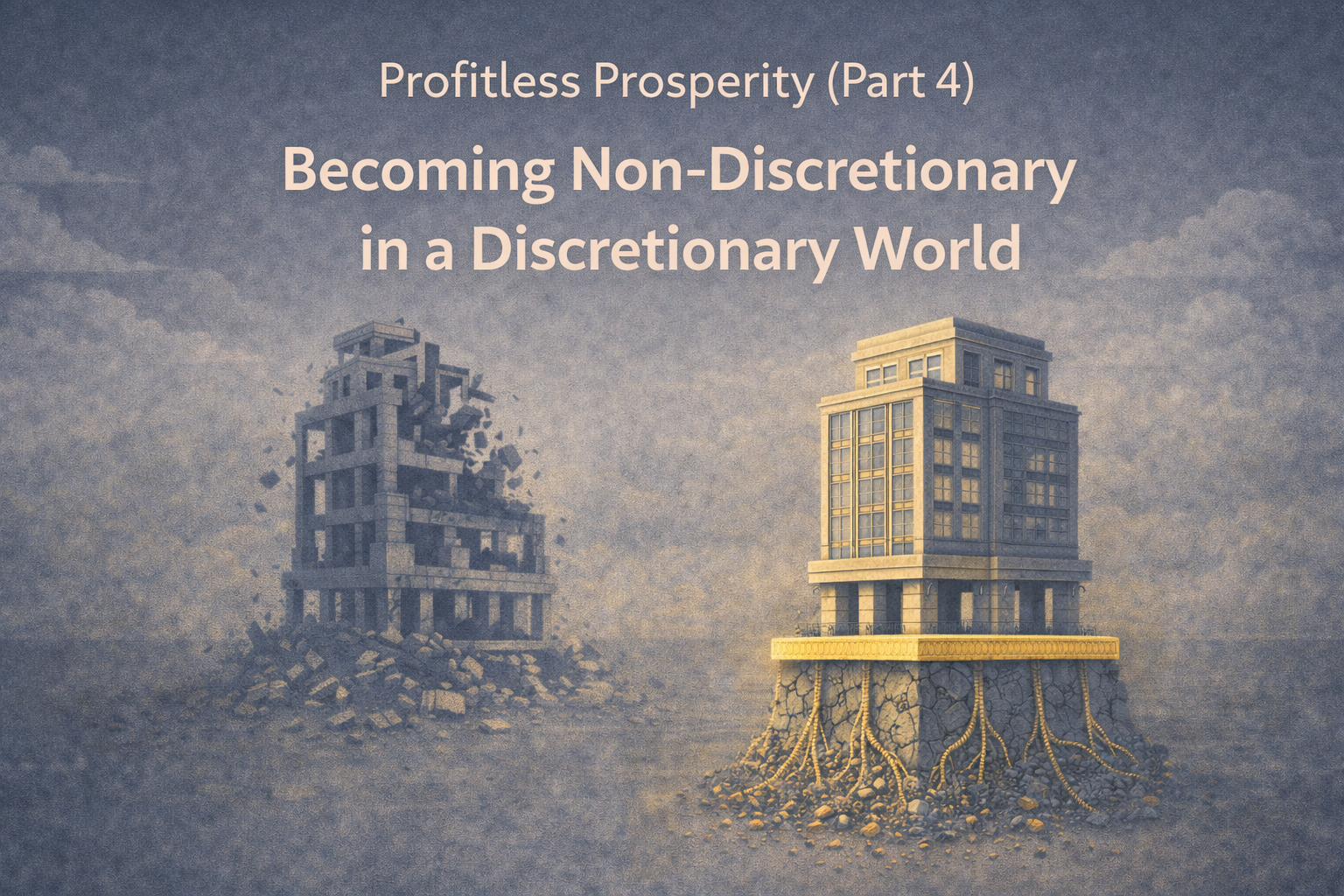
# Profitless Prosperity (part 4): Becoming Non-Discretionary in a Discretionary World

[Chris Scherer
February 16, 2026 ](https://www.cxoaccelerator.com/blog/author/chris-scherer)
- [BusinessStrategy](https://www.cxoaccelerator.com/blog/tag/businessstrategy)
- [CXO](https://www.cxoaccelerator.com/blog/tag/cxo)
- [ProfitlessProsperity](https://www.cxoaccelerator.com/blog/tag/profitlessprosperity)
- [LeadershipStrategy](https://www.cxoaccelerator.com/blog/tag/leadershipstrategy)
- [OperationalClarity](https://www.cxoaccelerator.com/blog/tag/operationalclarity)
- [StrategicPositioning](https://www.cxoaccelerator.com/blog/tag/strategicpositioning)
- [MarginResilience](https://www.cxoaccelerator.com/blog/tag/marginresilience)
- 2 mins
Every recession reshuffles the same deck.
Manufacturing contracts.
Capital spending slows.
Consumers defer.
Projects get postponed.
And yet, some businesses remain remarkably stable.
Why?
Because they are not discretionary.
They are necessary.
---
## The Quiet Pattern Across Recessions
Historically, discretionary industries absorb the sharpest impact during economic contractions.
Non-discretionary services – food distribution, medical services, pharmaceuticals, electrification, infrastructure, utilities – tend to hold far more stable ground.
The difference is not luck.
It is position.
Discretionary businesses depend on:
- Timing
- Sentiment
- Available capital
- Customer confidence
Non-discretionary businesses depend on:
- Need
- Continuity
- Operational necessity
- Survival
The question leaders should be asking now is simple:
> If pressure increases, will customers view what we provide as optional – or essential?
---
## Why This Matters Before 2030
ITR Economics has warned that the road ahead will be uneven, with volatility increasing toward the next decade.
Revenue may grow in the short term.
But when cycles turn, customers triage.
They eliminate what they can delay.
They preserve what they cannot operate without.
If your value is framed as enhancement rather than necessity, margin protection becomes exponentially harder.
---
## Becoming “Essential” Is a Leadership Decision
You do not need to change industries to become more resilient.
You may need to change how your value is defined.
Organizations that reposition successfully typically:
### 1️⃣ Redefine their offering around continuity
Instead of selling:
- Projects
- Customization
- Enhancements
They anchor value in:
- Operational uptime
- Risk reduction
- Compliance
- Reliability
They move from “improvement” to “indispensable.”
---
### 2️⃣ Remove optional complexity
Discretionary models often carry:
- Custom exceptions
- Broad service menus
- Unpriced expectations
- Undefined service boundaries
These increase fragility.
Resilient organizations clarify:
- What is included
- What is excluded
- What triggers escalation
- What success looks like
Clarity stabilizes margin.
---
### 3️⃣ Govern relationships intentionally
Becoming non-discretionary requires trust.
Trust requires structure.
That means:
- Defined roles and responsibilities
- Measurable service levels
- Mutually understood outcomes
- Accountability mechanisms before failure
When expectations are explicit and performance is visible, customers depend on you differently.
You are no longer an option.
You are infrastructure.
---
## The Margin Impact of Indispensability
When customers view your work as essential:
- Price discussions shift
- Renewal risk decreases
- Vendor negotiations stabilize
- Employees understand purpose
Margin protection becomes proactive rather than reactive.
This is not about raising prices aggressively.
It’s about designing your business so pricing reflects necessity.
---
## The Strategic Question Leaders Must Answer
Before the next downturn accelerates:
- Is your revenue driven by enhancement or necessity?
- Is your value tied to sentiment or survival?
- Are your agreements designed to hold under stress?
If the answer is unclear, growth alone will not protect you.
Position will.
---
## What Comes Next
In Part 5, we’ll explore the final lever leaders must confront:
> Why hiring more people rarely solves margin pressure – and how adding capacity without redesigning leadership systems accelerates profitless prosperity.
---
📅 [**[Schedule a Strategy Alignment Session](https://meetings.hubspot.com/chrisdscherer/strategy-alignment-session-intro-)]**
*Let’s determine whether your business is positioned as essential – or treated as optional.*

### Chris Scherer
Chris is a transformation leader with over 25 years of experience driving significant value and mitigating risks across a broad range of industries and functions. With a track record of generating more than $450 million in savings, he has excelled in both challenging and thriving environments within small businesses, mid-market firms, and Fortune 500 companies. A dual-degree graduate of Thunderbird and ESADE, Chris started his career at Arthur Andersen and progressed through roles from Corporate Audit to Global Human Resources at various Fortune 500 firms. He played a pivotal role in growing AArete, a global management consultancy, where he led initiatives that significantly reduced non-labor costs and improved compliance processes. An advocate for sustainable community initiatives, Chris was a founding member of a nonprofit focused on creating bicycle-friendly communities in New Jersey.
[mailto:chris@cxoaccelerator.com](mailto:chris@cxoaccelerator.com)
## Latest posts
- [ ALL POSTS ](https://www.cxoaccelerator.com/blog/all)
[ ](https://www.cxoaccelerator.com/blog/aligned-by-design-business-alignment)
[LeadershipDevelopment](https://www.cxoaccelerator.com/blog/tag/leadershipdevelopment) [BusinessStrategy](https://www.cxoaccelerator.com/blog/tag/businessstrategy) [Leadership](https://www.cxoaccelerator.com/blog/tag/leadership) [OperationalExcellence](https://www.cxoaccelerator.com/blog/tag/operationalexcellence) [StrategicPlanning](https://www.cxoaccelerator.com/blog/tag/strategicplanning) [OrganizationalAlignment](https://www.cxoaccelerator.com/blog/tag/organizationalalignment) [CXOLeadership](https://www.cxoaccelerator.com/blog/tag/cxoleadership)
Jul 6, 2026 3:57:14 PM
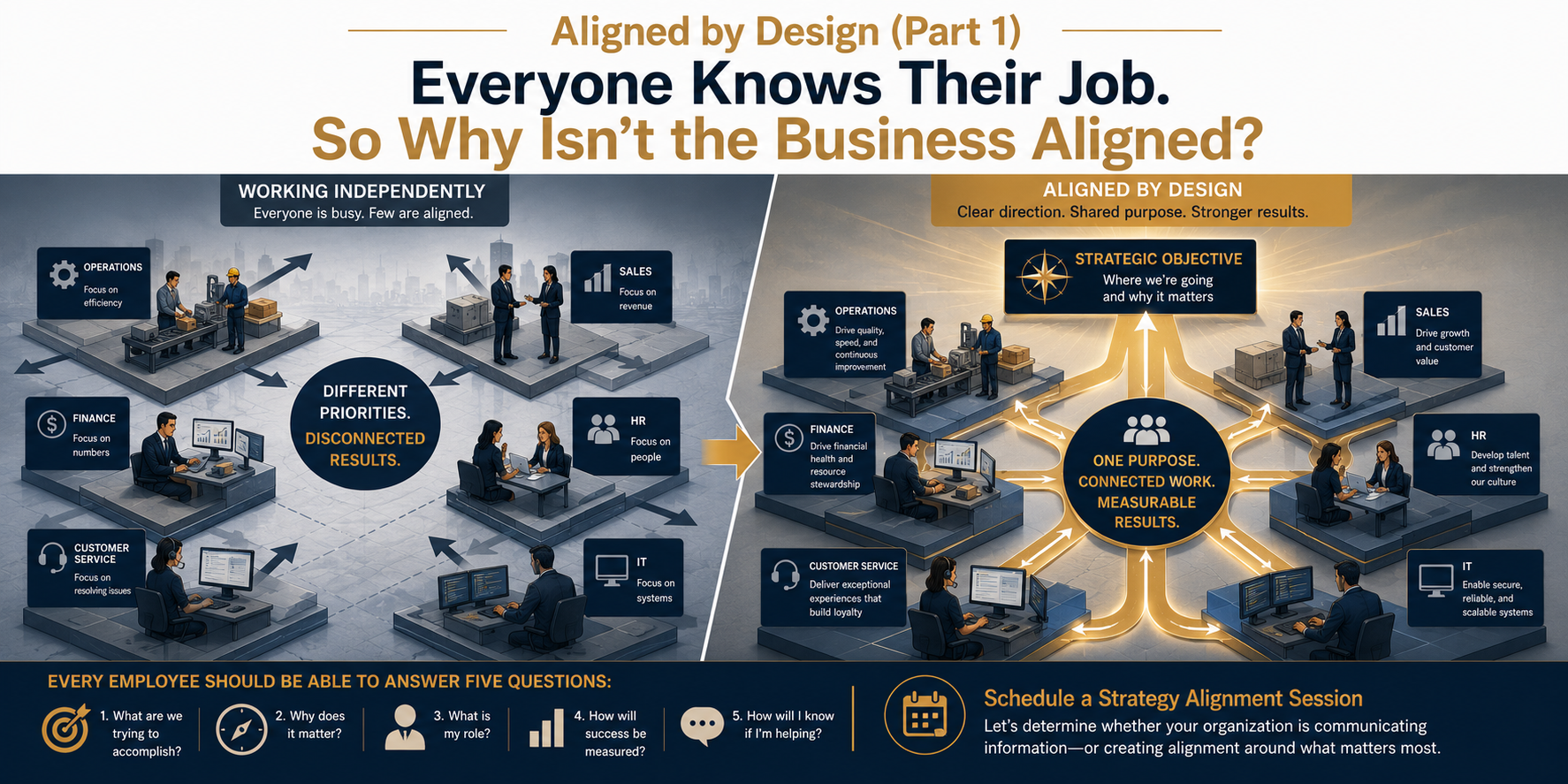
### [ Aligned by Design (Part 1): Everyone Knows Their Job. So Why Isn't the Business Aligned? ](https://www.cxoaccelerator.com/blog/aligned-by-design-business-alignment)
[ ](https://www.cxoaccelerator.com/blog/hiring-that-works-part-9-what-we-learned-about-predictable-hiring)
[LeadershipDevelopment](https://www.cxoaccelerator.com/blog/tag/leadershipdevelopment) [TalentStrategy](https://www.cxoaccelerator.com/blog/tag/talentstrategy) [Leadership](https://www.cxoaccelerator.com/blog/tag/leadership) [ExecutiveLeadership](https://www.cxoaccelerator.com/blog/tag/executiveleadership) [Hiring](https://www.cxoaccelerator.com/blog/tag/hiring) [OrganizationalDesign](https://www.cxoaccelerator.com/blog/tag/organizationaldesign) [CXOLeadership](https://www.cxoaccelerator.com/blog/tag/cxoleadership) [PredictablePerformance](https://www.cxoaccelerator.com/blog/tag/predictableperformance)
Jun 29, 2026 4:34:03 PM
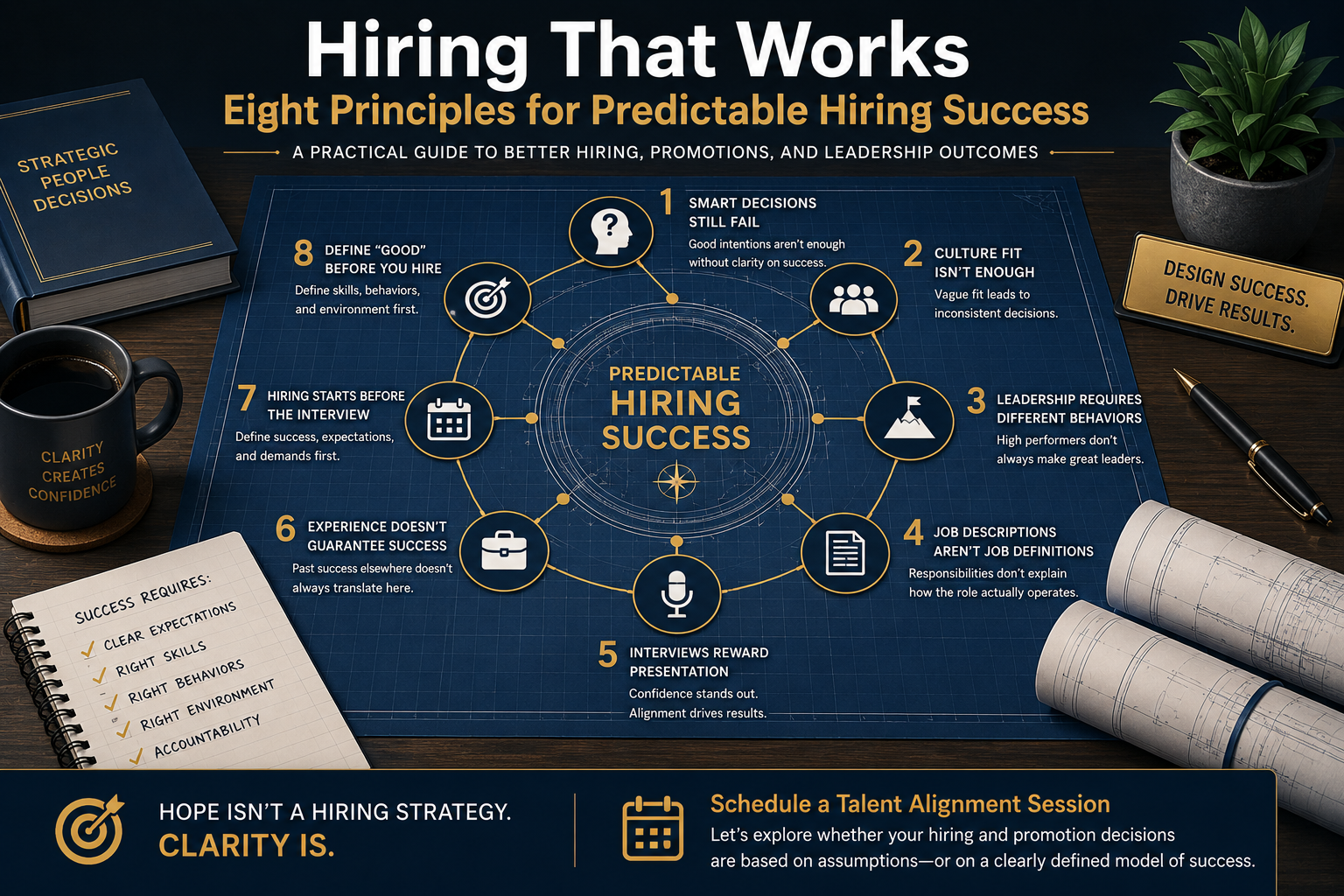
### [ Hiring That Works (Part 9): What We Learned About Predictable Hiring ](https://www.cxoaccelerator.com/blog/hiring-that-works-part-9-what-we-learned-about-predictable-hiring)
```json
{
"@context" : "https://schema.org",
"@type" : "BlogPosting",
"author" : {
"@type" : "Person",
"name" : "Chris Scherer",
"url" : "https://www.cxoaccelerator.com/blog/author/chris-scherer"
},
"dateModified" : "2026-02-16T16:30:45.082Z",
"datePublished" : "2026-02-16T16:30:32.000Z",
"headline" : "Profitless Prosperity (part 4): Becoming Non-Discretionary in a Discretionary World",
"image" : [ "https://www.cxoaccelerator.com/hubfs/20260216%20Prosperity%20part%204.png" ],
"mainEntityOfPage" : {
"@id" : "https://www.cxoaccelerator.com/blog/profitless-prosperity-part-4-becoming-non-discretionary-in-a-discretionary-world",
"@type" : "WebPage"
},
"publisher" : {
"@type" : "Organization",
"logo" : {
"@type" : "ImageObject",
"url" : "https://www.cxoaccelerator.com/hubfs/logos/CXOLogoFinal_Cropped.png"
}
}
}
```