---
title: "Profitless Prosperity (part 3): Inflation, Labor, and the Illusion of Control"
description: Inflation and wage growth will pressure margins. Learn why pricing alone won’t save you—and how leaders must redesign value delivery.
image: https://www.cxoaccelerator.com/hubfs/20260330%20Prosperity%20Part%203.png
---
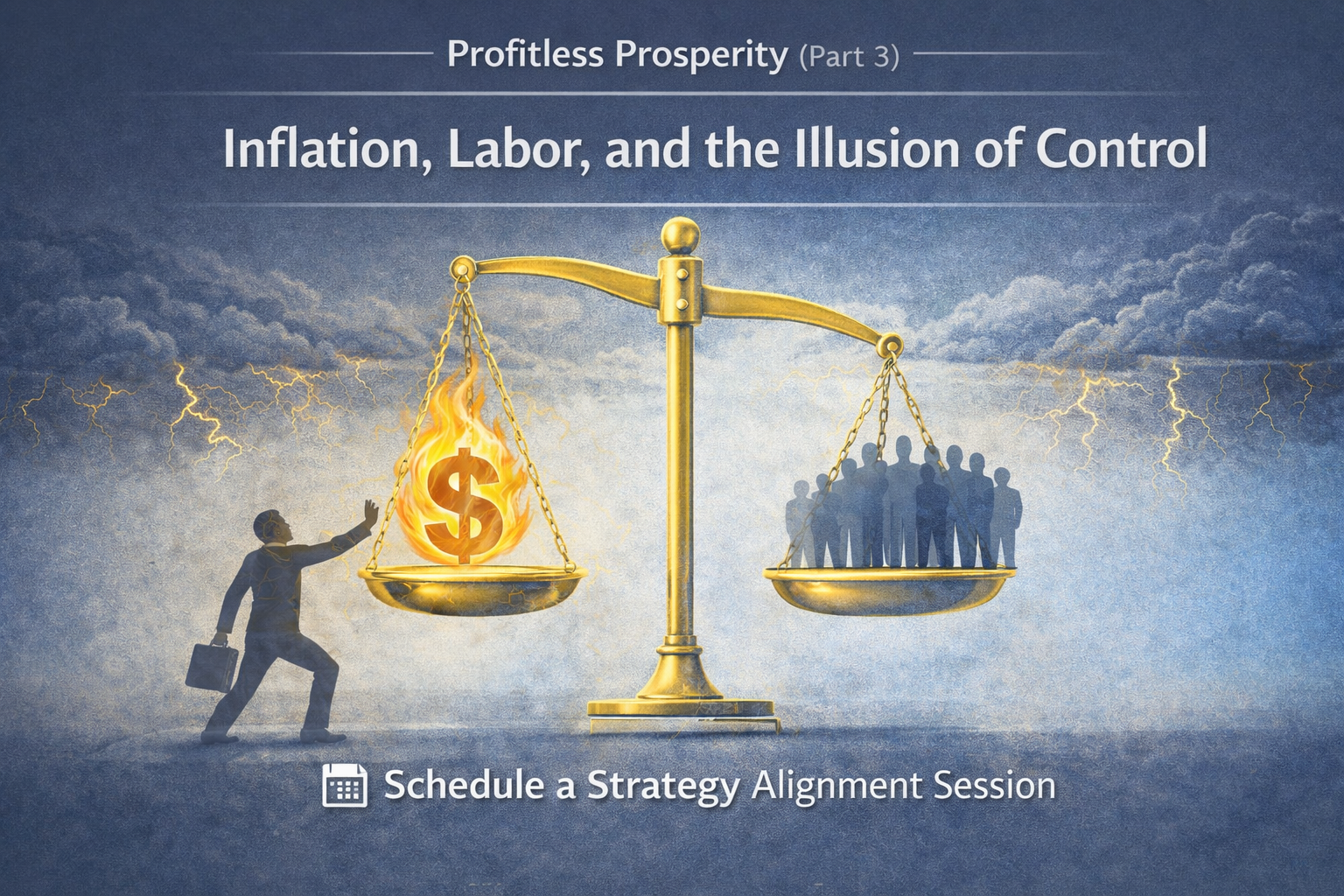
# Profitless Prosperity (part 3): Inflation, Labor, and the Illusion of Control

[Chris Scherer
March 30, 2026 ](https://www.cxoaccelerator.com/blog/author/chris-scherer)
- [BusinessStrategy](https://www.cxoaccelerator.com/blog/tag/businessstrategy)
- [CXO](https://www.cxoaccelerator.com/blog/tag/cxo)
- [ProfitlessProsperity](https://www.cxoaccelerator.com/blog/tag/profitlessprosperity)
- [LeadershipStrategy](https://www.cxoaccelerator.com/blog/tag/leadershipstrategy)
- [MarginResilience](https://www.cxoaccelerator.com/blog/tag/marginresilience)
- [InflationPressure](https://www.cxoaccelerator.com/blog/tag/inflationpressure)
- [OperationalDesign](https://www.cxoaccelerator.com/blog/tag/operationaldesign)
- 2 mins
Most leaders say they understand inflation.
Fewer understand what it will actually do to their margins.
ITR Economics projects another inflationary cycle building toward the end of the decade, driven by labor shortages, government borrowing, and structural demographic shifts. Wages alone are expected to rise materially through 2029.
That reality creates a dangerous illusion:
> “We’ll just pass the increases through.”
In theory, that works.
In practice, it rarely does.
---
## The Wage Pressure Problem
When wages rise 15–20% over several years, the impact is not linear.
It compounds.
Higher wages:
- Increase payroll costs
- Raise benefit burdens
- Increase vendor pricing
- Shift customer expectations
- Trigger internal compression pressure
Even organizations with strong pricing power discover that pass-through increases lag behind cost acceleration.
The result?
Margins tighten—quietly at first.
---
## Why Pricing Strategy Alone Isn’t Enough
Most companies approach inflation tactically:
- Raise prices annually
- Adjust mid-year if necessary
- Negotiate with vendors
- Cut discretionary spend
But inflation is not just a pricing problem.
It’s a **value delivery problem**.
If your value proposition hasn’t been clarified and stabilized:
- Customers resist increases
- Employees question tradeoffs
- Vendors renegotiate aggressively
- Leaders absorb the conflict
You can’t price your way out of structural inefficiency.
---
## The Labor Illusion: “We Just Need More People”
When demand remains strong but labor tightens, many organizations default to hiring.
But in inflationary environments:
- Hiring accelerates cost pressure
- Training increases non-productive time
- Turnover risk rises
- Cultural strain intensifies
Without redesigning how work flows, new hires amplify complexity.
And complexity is expensive.
---
## The Real Leadership Test
Inflation and labor shortages don’t create weak systems.
They expose them.
Organizations that navigate inflation successfully share three characteristics:
### 1️⃣ They redesign work before hiring
They ask:
- What decisions are bottlenecked?
- Where is rework happening?
- Which steps add cost but not value?
They eliminate waste before adding labor.
---
### 2️⃣ They clarify non-negotiable value
Instead of broad offerings that invite negotiation, they:
- Define what is essential
- Remove customization creep
- Protect margins by protecting clarity
When value is explicit, pricing is defensible.
---
### 3️⃣ They govern relationships intentionally
They treat vendor, employee, and customer relationships as structured systems—not transactions.
They define:
- Roles and responsibilities
- Service expectations
- Accountability measures
- Escalation paths
And they do this before pressure peaks.
---
## Why “Hope Is Not a Strategy” Matters Now
One of the most practical pieces of advice shared at the Econ Club luncheon was simple:
> Hope is not a strategy.
Leaders hoping inflation cools.
Hoping labor stabilizes.
Hoping pricing holds.
Hope does not protect margins.
Design does.
---
📅 [**[Schedule a Strategy Alignment Session](https://meetings.hubspot.com/chrisdscherer/strategy-alignment-session-intro-)]**
*Let’s determine whether your margin model is built to withstand wage and inflation pressure.*

### Chris Scherer
Chris is a transformation leader with over 25 years of experience driving significant value and mitigating risks across a broad range of industries and functions. With a track record of generating more than $450 million in savings, he has excelled in both challenging and thriving environments within small businesses, mid-market firms, and Fortune 500 companies. A dual-degree graduate of Thunderbird and ESADE, Chris started his career at Arthur Andersen and progressed through roles from Corporate Audit to Global Human Resources at various Fortune 500 firms. He played a pivotal role in growing AArete, a global management consultancy, where he led initiatives that significantly reduced non-labor costs and improved compliance processes. An advocate for sustainable community initiatives, Chris was a founding member of a nonprofit focused on creating bicycle-friendly communities in New Jersey.
[mailto:chris@cxoaccelerator.com](mailto:chris@cxoaccelerator.com)
## Latest posts
- [ ALL POSTS ](https://www.cxoaccelerator.com/blog/all)
[ ](https://www.cxoaccelerator.com/blog/aligned-by-design-business-alignment)
[LeadershipDevelopment](https://www.cxoaccelerator.com/blog/tag/leadershipdevelopment) [BusinessStrategy](https://www.cxoaccelerator.com/blog/tag/businessstrategy) [Leadership](https://www.cxoaccelerator.com/blog/tag/leadership) [OperationalExcellence](https://www.cxoaccelerator.com/blog/tag/operationalexcellence) [StrategicPlanning](https://www.cxoaccelerator.com/blog/tag/strategicplanning) [OrganizationalAlignment](https://www.cxoaccelerator.com/blog/tag/organizationalalignment) [CXOLeadership](https://www.cxoaccelerator.com/blog/tag/cxoleadership)
Jul 6, 2026 3:57:14 PM
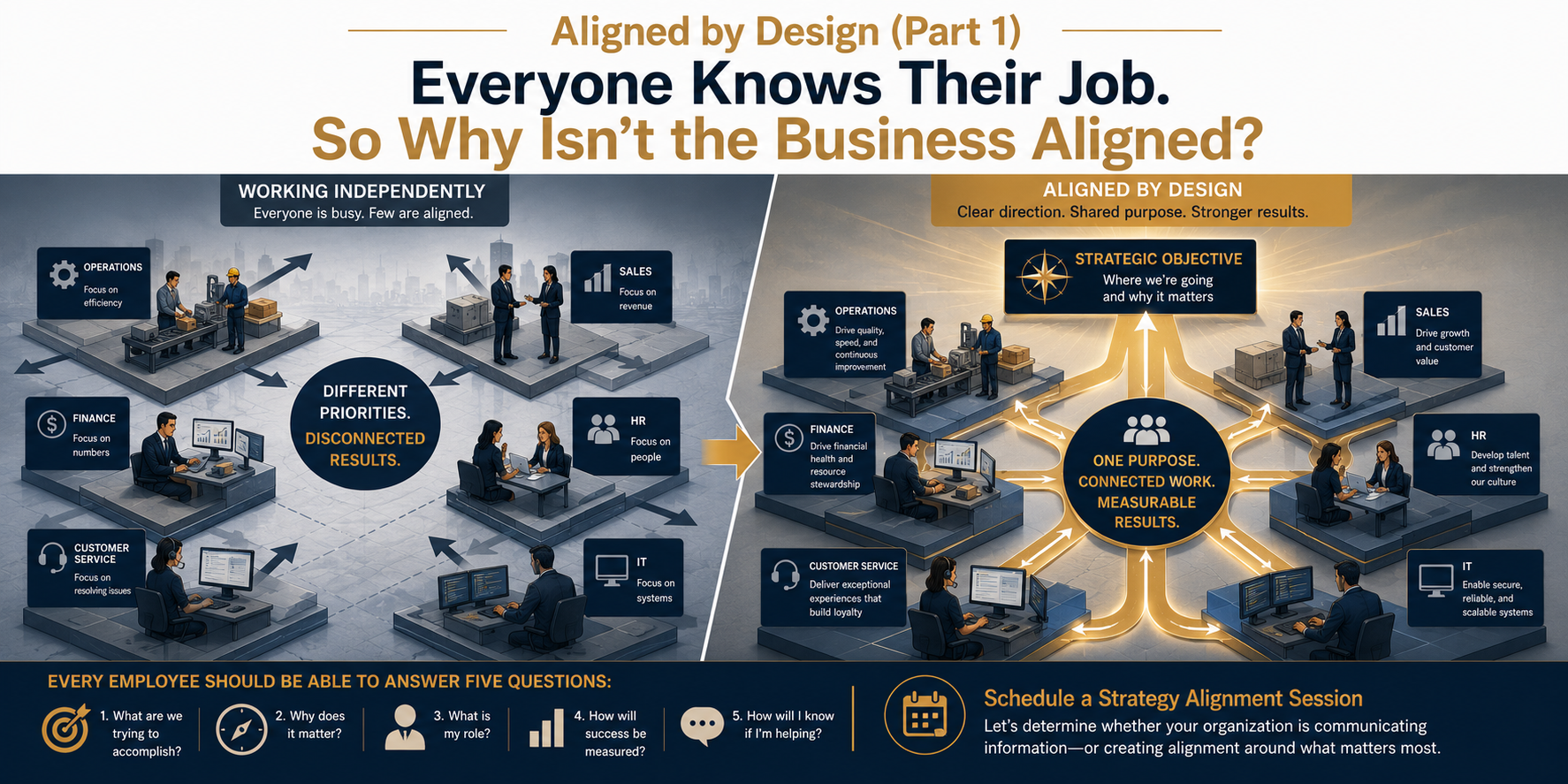
### [ Aligned by Design (Part 1): Everyone Knows Their Job. So Why Isn't the Business Aligned? ](https://www.cxoaccelerator.com/blog/aligned-by-design-business-alignment)
[ ](https://www.cxoaccelerator.com/blog/hiring-that-works-part-9-what-we-learned-about-predictable-hiring)
[LeadershipDevelopment](https://www.cxoaccelerator.com/blog/tag/leadershipdevelopment) [TalentStrategy](https://www.cxoaccelerator.com/blog/tag/talentstrategy) [Leadership](https://www.cxoaccelerator.com/blog/tag/leadership) [ExecutiveLeadership](https://www.cxoaccelerator.com/blog/tag/executiveleadership) [Hiring](https://www.cxoaccelerator.com/blog/tag/hiring) [OrganizationalDesign](https://www.cxoaccelerator.com/blog/tag/organizationaldesign) [CXOLeadership](https://www.cxoaccelerator.com/blog/tag/cxoleadership) [PredictablePerformance](https://www.cxoaccelerator.com/blog/tag/predictableperformance)
Jun 29, 2026 4:34:03 PM
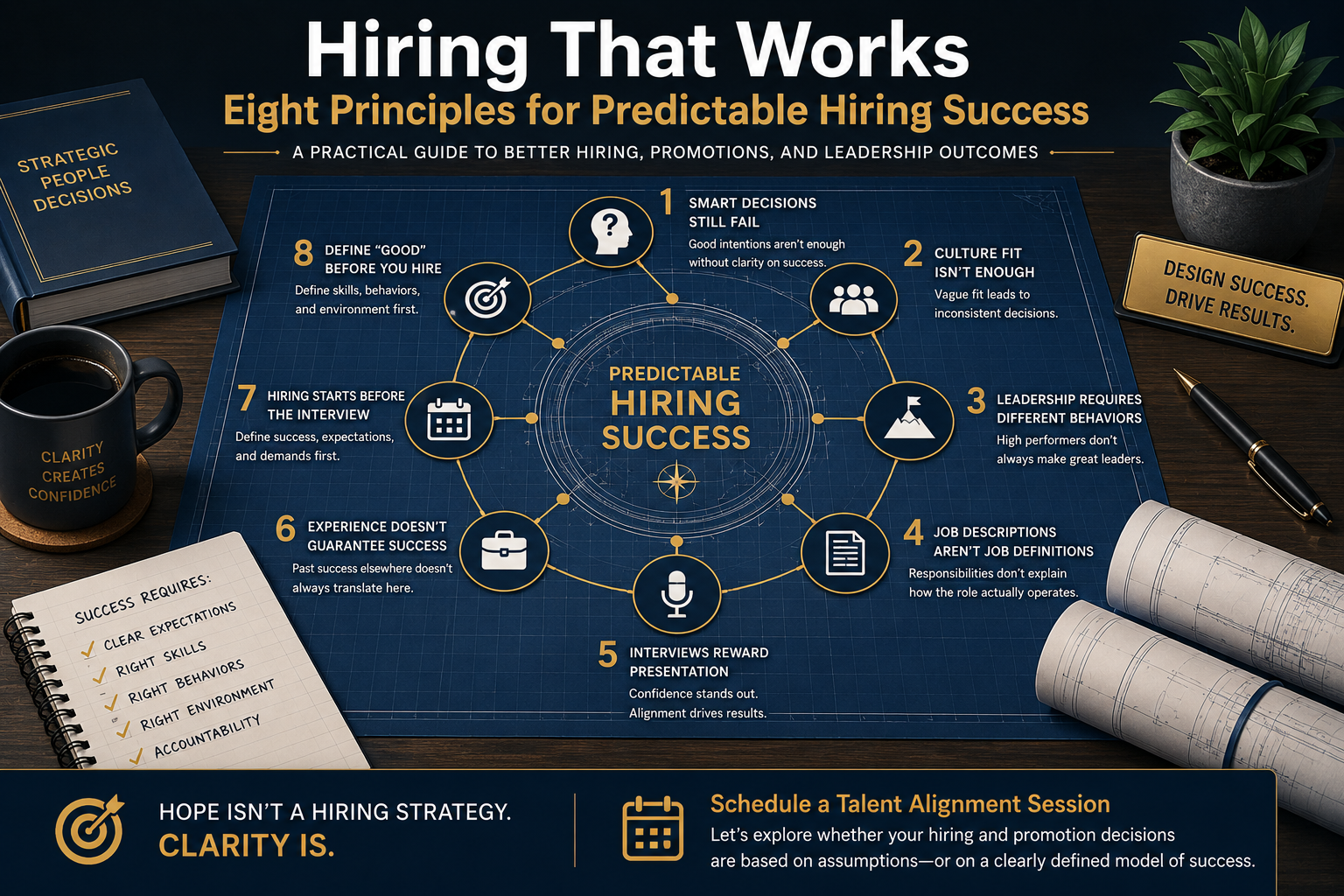
### [ Hiring That Works (Part 9): What We Learned About Predictable Hiring ](https://www.cxoaccelerator.com/blog/hiring-that-works-part-9-what-we-learned-about-predictable-hiring)
```json
{
"@context" : "https://schema.org",
"@type" : "BlogPosting",
"author" : {
"@type" : "Person",
"name" : "Chris Scherer",
"url" : "https://www.cxoaccelerator.com/blog/author/chris-scherer"
},
"dateModified" : "2026-03-30T16:22:45.722Z",
"datePublished" : "2026-03-30T16:22:33.000Z",
"headline" : "Profitless Prosperity (part 3): Inflation, Labor, and the Illusion of Control",
"image" : [ "https://www.cxoaccelerator.com/hubfs/20260330%20Prosperity%20Part%203.png" ],
"mainEntityOfPage" : {
"@id" : "https://www.cxoaccelerator.com/blog/profitless-prosperity-part-3-inflation-labor-and-the-illusion-of-control",
"@type" : "WebPage"
},
"publisher" : {
"@type" : "Organization",
"logo" : {
"@type" : "ImageObject",
"url" : "https://www.cxoaccelerator.com/hubfs/logos/CXOLogoFinal_Cropped.png"
}
}
}
```