---
title: "Beyond the Blueprint (Part 3): Why Adding People Doesn’t Fix a Leadership Bottleneck"
description: Hiring doesn’t fix leadership bottlenecks. Learn why adding people often increases drag—and what leaders must change to restore momentum.
image: https://www.cxoaccelerator.com/hubfs/20250105v1%20BtB%20part%203.png
---

# Beyond the Blueprint (Part 3): Why Adding People Doesn’t Fix a Leadership Bottleneck

[Chris Scherer
January 5, 2026 ](https://www.cxoaccelerator.com/blog/author/chris-scherer)
- [BusinessGrowth](https://www.cxoaccelerator.com/blog/tag/businessgrowth)
- [ExecutiveLeadership](https://www.cxoaccelerator.com/blog/tag/executiveleadership)
- [CXOAccelerator](https://www.cxoaccelerator.com/blog/tag/cxoaccelerator)
- [OrganizationalDesign](https://www.cxoaccelerator.com/blog/tag/organizationaldesign)
- [BeyondTheBlueprint](https://www.cxoaccelerator.com/blog/tag/beyondtheblueprint)
- [LeadershipBench](https://www.cxoaccelerator.com/blog/tag/leadershipbench)
- [LeadershipBottleneck](https://www.cxoaccelerator.com/blog/tag/leadershipbottleneck)
- 6 mins
When growth stalls, the most common response is simple:
> “We need more people.”
More managers.
More specialists.
More layers.
On paper, it makes sense. If leaders are overloaded, adding capacity should help.
But in many organizations, it does the opposite.
Decision-making slows further.
Confusion increases.
Accountability blurs.
And leaders feel even more stretched than before.
When that happens, the issue isn’t headcount.
It’s a **leadership bottleneck that hiring alone can’t fix**.
---
## The Mistake Leaders Don’t Realize They’re Making
When leadership capacity is strained, organizations often add people **without changing how decisions are made**.
So while roles increase:
- Authority doesn’t move
- Judgment doesn’t spread
- Ownership remains unclear
New hires quickly learn:
> “Important decisions still go up.”
As a result:
- Escalations continue
- Leaders stay involved in everything
- The bottleneck simply gets more expensive
This is how organizations add cost **without adding capacity**.
---
## Why New Roles Often Increase Drag
When leadership bottlenecks exist, adding people introduces new problems:
- More handoffs
- More coordination
- More meetings to align decisions that still can’t be made locally
Instead of increasing speed, the organization becomes:
- More dependent on alignment
- More cautious
- More fragmented
The business didn’t gain leverage.
It gained complexity.
---
## The Real Issue: Accountability Without Authority
One of the most common failure patterns looks like this:
People are held accountable for outcomes – but not given the authority to make decisions that affect them.
So they:
- Ask for approval
- Wait for direction
- Defer judgment upward
From leadership’s perspective:
> “They should be more proactive.”
From the team’s perspective:
> “We’re not empowered to decide.”
That gap is where leadership bottlenecks live.
---
## Why Promoting Strong Operators Doesn’t Solve It Either
Another common move is promoting high performers into leadership roles.
Sometimes it works.
Often, it doesn’t.
Why?
Because execution strength and leadership readiness are not the same thing.
Strong operators:
- Solve problems themselves
- Step in when things break
- Keep things moving
But leadership requires something different:
- Delegating judgment
- Letting others struggle productively
- Making decisions through people, not around them
Without support, new leaders either:
- Become bottlenecks themselves, or
- Retreat into execution, recreating the same constraint at a new level
---
## What Actually Relieves a Leadership Bottleneck
Leadership bottlenecks don’t break when you add people.
They break when:
- Decision rights are clarified
- Ownership is explicit
- Judgment is developed and trusted
- Leaders stop being the default answer
In other words:
> Capacity increases when **more people can make sound decisions at the right level**.
That’s not a staffing issue.
That’s a **leadership design issue**.
---
## The Cost of Getting This Wrong
When organizations keep hiring without addressing leadership capacity, they often experience:
- Rising costs with flat output
- Growing frustration at every level
- Burnout at the top
- Disengagement in the middle
Eventually, leaders conclude:
> “We’re staffed…so why does this still feel hard?”
Because the bottleneck was never headcount.
---
## What Comes Next
In Part 4 of *Beyond the Blueprint*, we’ll focus on the proactive side of the equation:
> How leadership teams intentionally build a **leadership bench –**before growth demands it.
We’ll explore:
- What leadership readiness actually looks like
- How to develop judgment without slowing execution
- Why bench strength is a strategic asset, not an HR initiative
---
📅 **[[Schedule a Strategy Alignment Session](https://meetings.hubspot.com/chrisdscherer/strategy-alignment-session-intro-)]**
If your organization keeps adding people but progress isn’t accelerating, let’s identify whether leadership capacity – not staffing – is the real constraint.

### Chris Scherer
Chris is a transformation leader with over 25 years of experience driving significant value and mitigating risks across a broad range of industries and functions. With a track record of generating more than $450 million in savings, he has excelled in both challenging and thriving environments within small businesses, mid-market firms, and Fortune 500 companies. A dual-degree graduate of Thunderbird and ESADE, Chris started his career at Arthur Andersen and progressed through roles from Corporate Audit to Global Human Resources at various Fortune 500 firms. He played a pivotal role in growing AArete, a global management consultancy, where he led initiatives that significantly reduced non-labor costs and improved compliance processes. An advocate for sustainable community initiatives, Chris was a founding member of a nonprofit focused on creating bicycle-friendly communities in New Jersey.
[mailto:chris@cxoaccelerator.com](mailto:chris@cxoaccelerator.com)
## Latest posts
- [ ALL POSTS ](https://www.cxoaccelerator.com/blog/all)
[ ](https://www.cxoaccelerator.com/blog/aligned-by-design-business-alignment)
[LeadershipDevelopment](https://www.cxoaccelerator.com/blog/tag/leadershipdevelopment) [BusinessStrategy](https://www.cxoaccelerator.com/blog/tag/businessstrategy) [Leadership](https://www.cxoaccelerator.com/blog/tag/leadership) [OperationalExcellence](https://www.cxoaccelerator.com/blog/tag/operationalexcellence) [StrategicPlanning](https://www.cxoaccelerator.com/blog/tag/strategicplanning) [OrganizationalAlignment](https://www.cxoaccelerator.com/blog/tag/organizationalalignment) [CXOLeadership](https://www.cxoaccelerator.com/blog/tag/cxoleadership)
Jul 6, 2026 3:57:14 PM
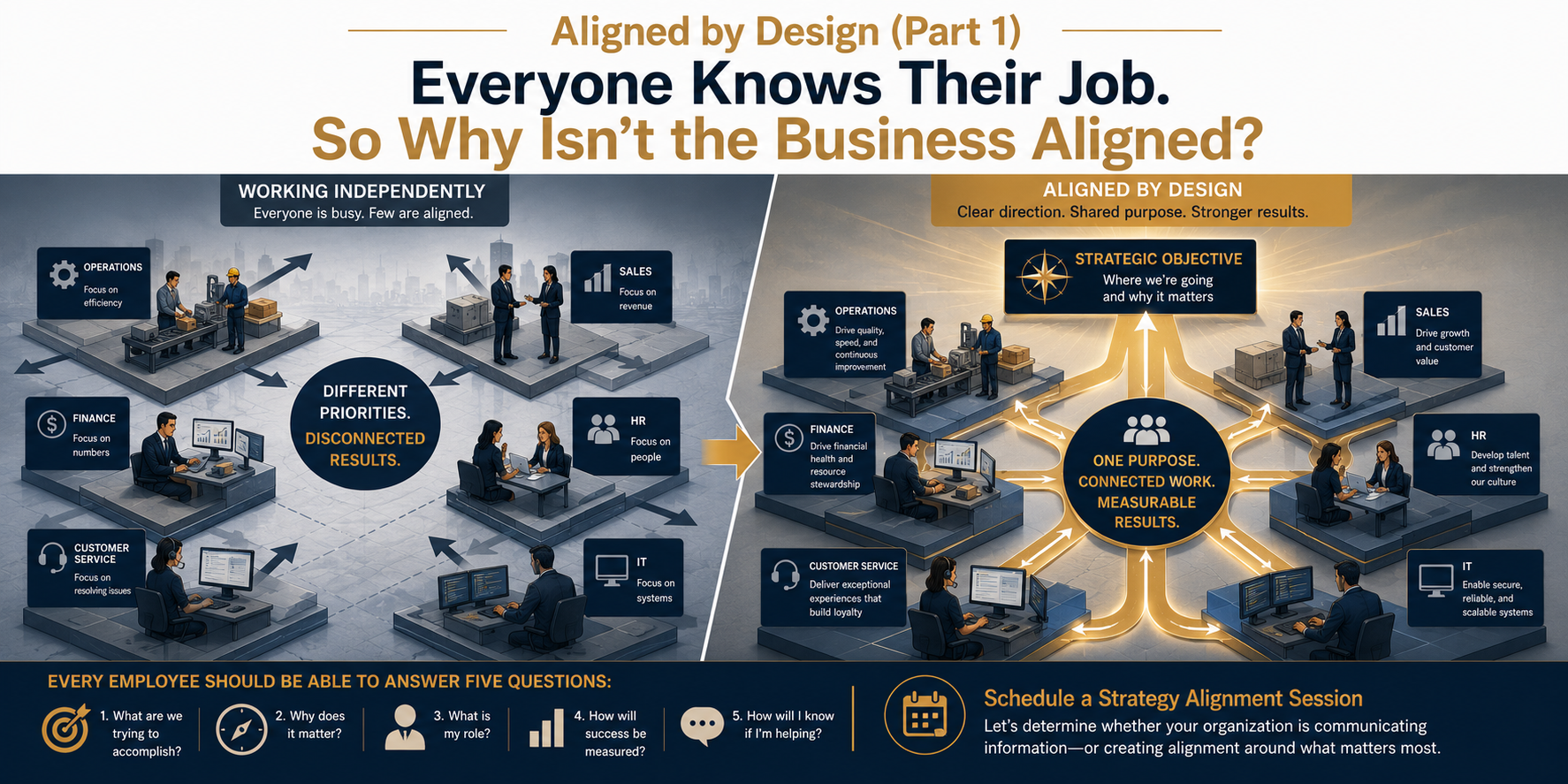
### [ Aligned by Design (Part 1): Everyone Knows Their Job. So Why Isn't the Business Aligned? ](https://www.cxoaccelerator.com/blog/aligned-by-design-business-alignment)
[ ](https://www.cxoaccelerator.com/blog/hiring-that-works-part-9-what-we-learned-about-predictable-hiring)
[LeadershipDevelopment](https://www.cxoaccelerator.com/blog/tag/leadershipdevelopment) [TalentStrategy](https://www.cxoaccelerator.com/blog/tag/talentstrategy) [Leadership](https://www.cxoaccelerator.com/blog/tag/leadership) [ExecutiveLeadership](https://www.cxoaccelerator.com/blog/tag/executiveleadership) [Hiring](https://www.cxoaccelerator.com/blog/tag/hiring) [OrganizationalDesign](https://www.cxoaccelerator.com/blog/tag/organizationaldesign) [CXOLeadership](https://www.cxoaccelerator.com/blog/tag/cxoleadership) [PredictablePerformance](https://www.cxoaccelerator.com/blog/tag/predictableperformance)
Jun 29, 2026 4:34:03 PM
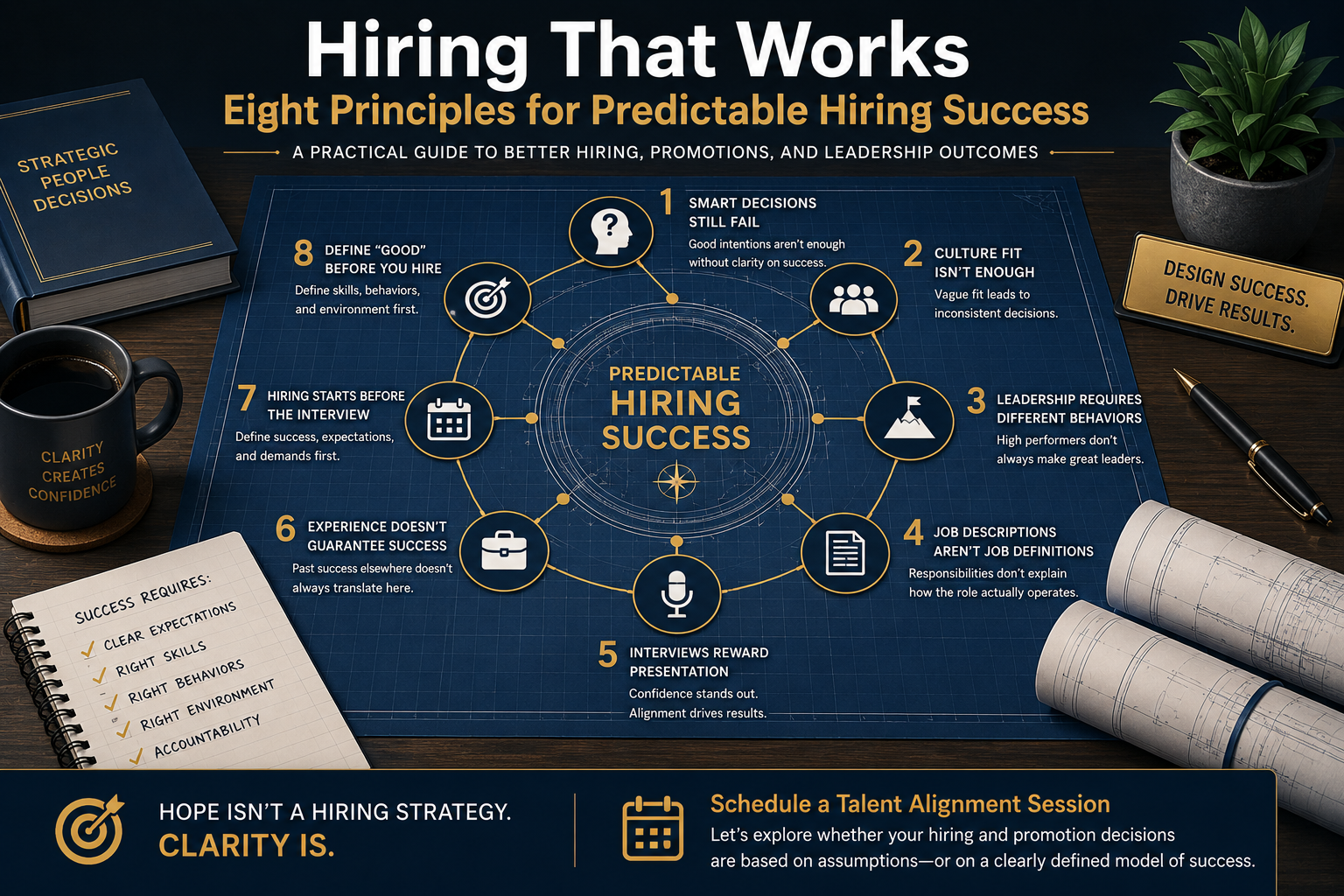
### [ Hiring That Works (Part 9): What We Learned About Predictable Hiring ](https://www.cxoaccelerator.com/blog/hiring-that-works-part-9-what-we-learned-about-predictable-hiring)
```json
{
"@context" : "https://schema.org",
"@type" : "BlogPosting",
"author" : {
"@type" : "Person",
"name" : "Chris Scherer",
"url" : "https://www.cxoaccelerator.com/blog/author/chris-scherer"
},
"dateModified" : "2026-01-12T15:27:18.846Z",
"datePublished" : "2026-01-05T16:32:48.000Z",
"headline" : "Beyond the Blueprint (Part 3): Why Adding People Doesn’t Fix a Leadership Bottleneck",
"image" : [ "https://www.cxoaccelerator.com/hubfs/20250105v1%20BtB%20part%203.png" ],
"mainEntityOfPage" : {
"@id" : "https://www.cxoaccelerator.com/blog/why-adding-people-doesnt-fix-a-leadership-bottleneck",
"@type" : "WebPage"
},
"publisher" : {
"@type" : "Organization",
"logo" : {
"@type" : "ImageObject",
"url" : "https://www.cxoaccelerator.com/hubfs/logos/CXOLogoFinal_Cropped.png"
}
}
}
```