By the time organizations reach a certain level of maturity, most of the obvious problems have been addressed.
Processes are documented.
Systems are in place.
Costs have been reviewed.
On paper, execution should improve.
But in many companies, it doesn’t.
Work still slows.
Decisions still bottleneck.
Costs quietly creep back in.
At that stage, the issue is rarely strategy or effort.
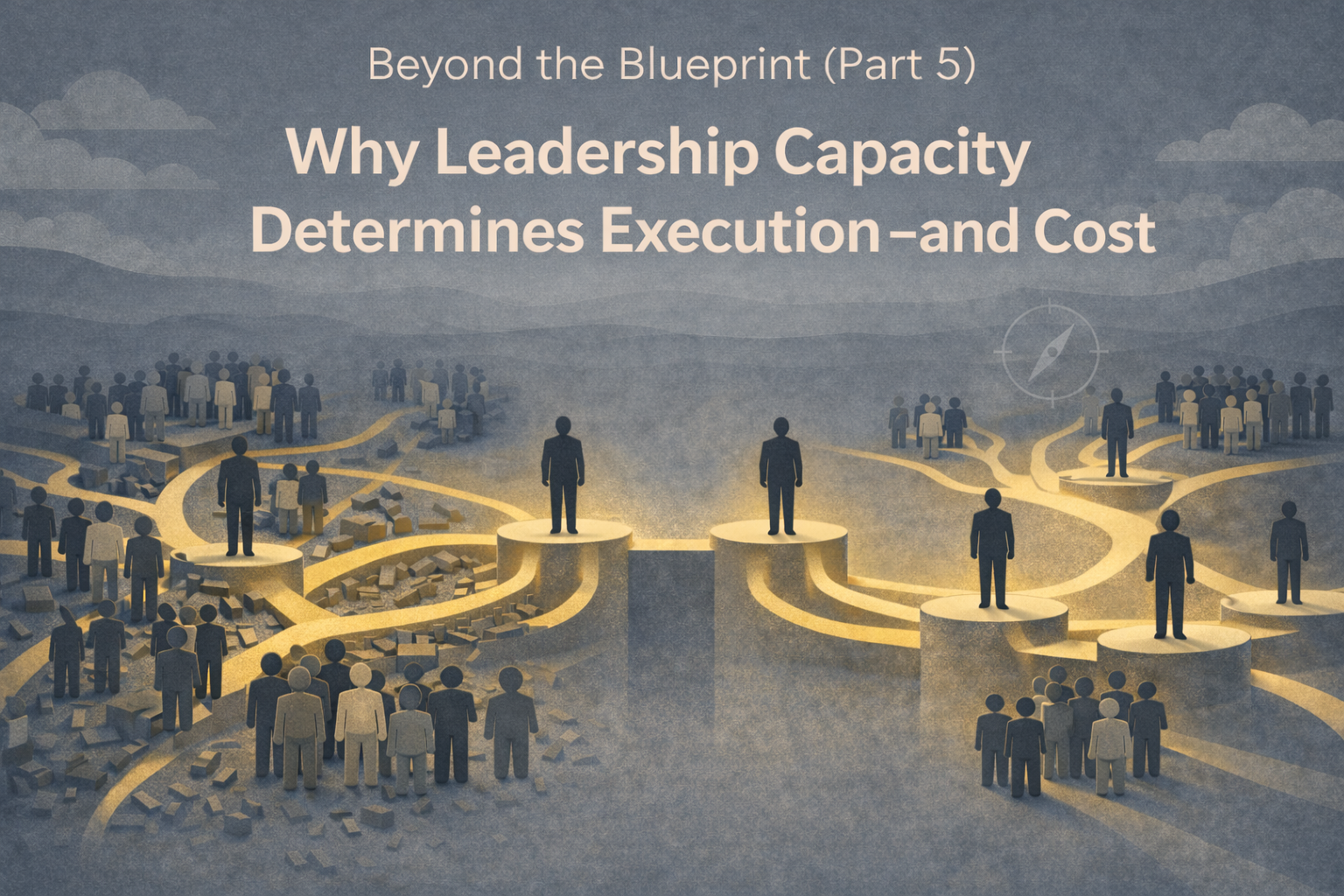
It’s leadership capacity.
The Execution Problem That Doesn’t Show Up on a P&L
When execution breaks down, leaders often look for operational explanations:
-
Inefficient workflows
-
Poor tools
-
Lack of discipline
-
Too much customization
Those issues are real – but they’re often symptoms, not causes.
What sits underneath them is something harder to measure:
How much decision-making, judgment, and ownership the organization can absorb without relying on a few individuals.
That’s leadership capacity.
And when it’s limited, execution becomes fragile – and expensive.
How Leadership Bottlenecks Drive Cost Back In
When leadership capacity is constrained:
-
Decisions wait instead of moving
-
Work pauses for approval
-
Teams hedge instead of committing
-
Rework increases to avoid risk
None of this shows up as a single line item.
Instead, cost reappears as:
-
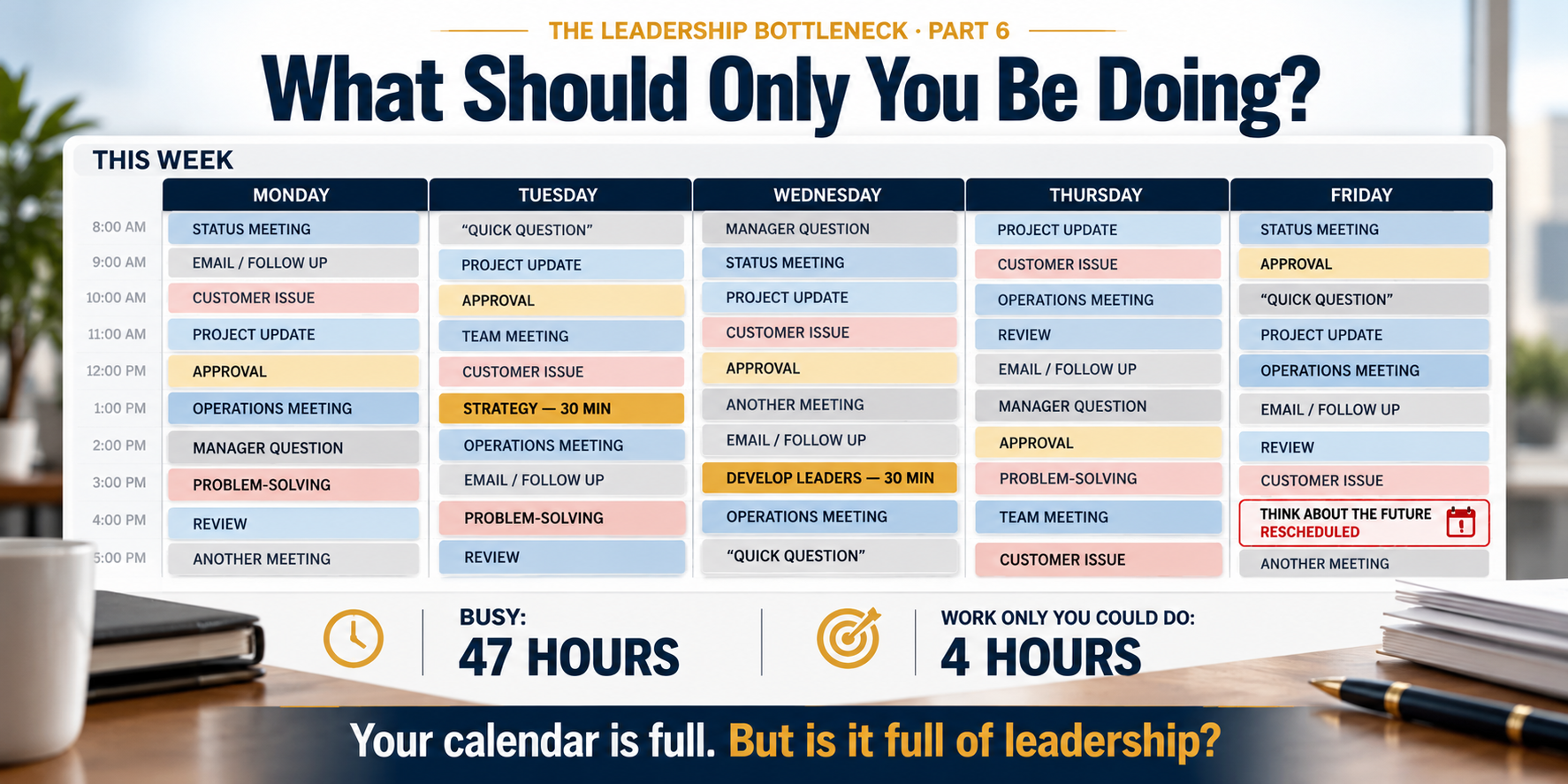
Extra meetings
-
Duplicate work
-
Slower cycle times
-
Burned-out leaders
-
Underutilized talent
From the outside, it looks like inefficiency.
From the inside, it feels like:
“Why does everything still depend on us?”
Why Cost Reduction Fails Without Leadership Capacity
This is why many cost reduction efforts fail to hold.
Organizations cut:
But they don’t change:
As a result:
Costs may drop temporarily.
But execution slows – and costs return.
Leadership Capacity Is an Execution Multiplier
Organizations with sufficient leadership capacity behave differently:
-
Decisions move closer to the work
-
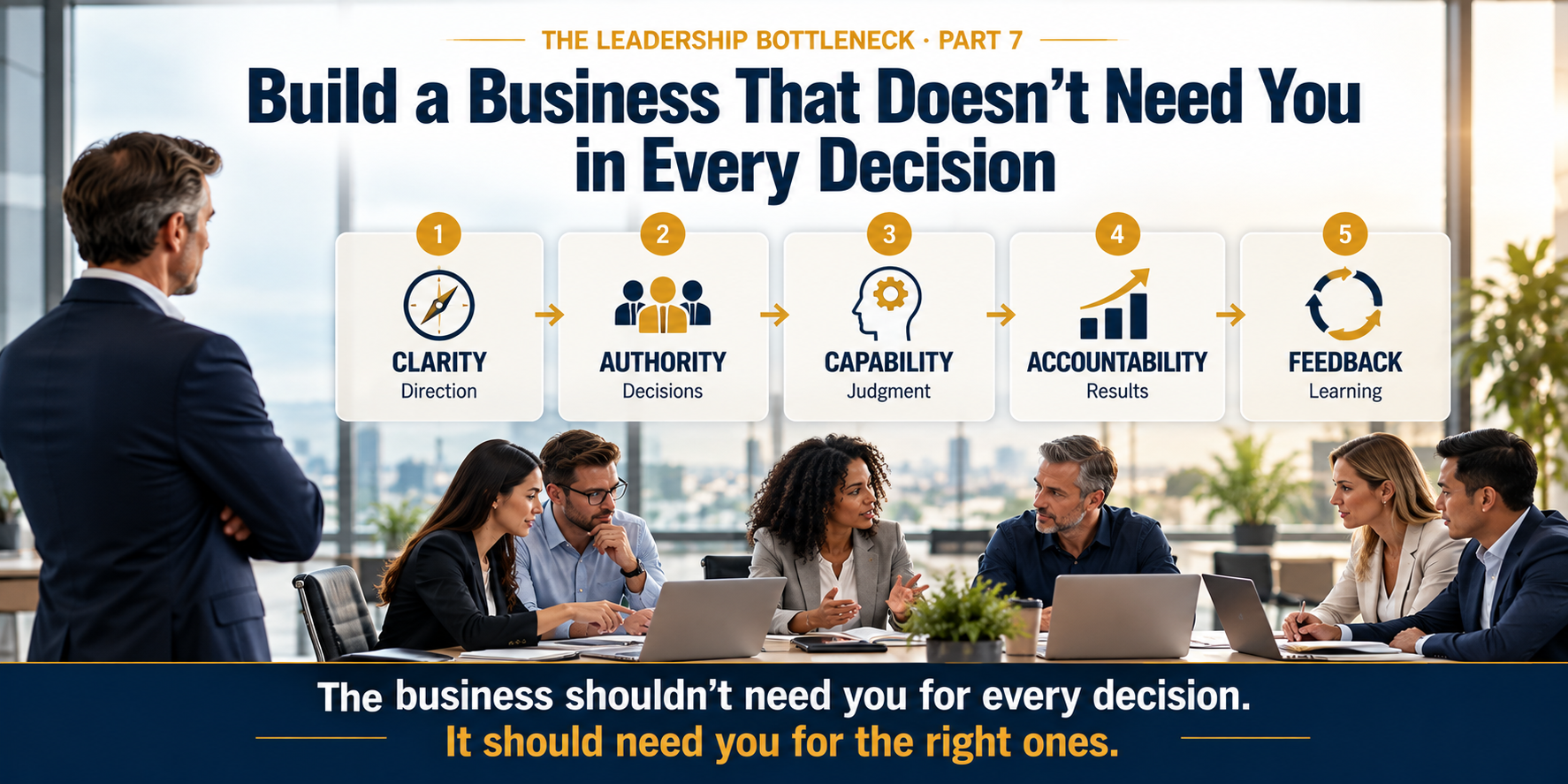
Leaders stop being the default answer
-
Execution stabilizes without constant oversight
As capacity increases:
Not because people work harder – but because work is designed to move.
The Shift Leaders Must Make
At this stage of growth, the leadership challenge changes.
It’s no longer:
It becomes:
That requires leaders to:
-
Stop equating involvement with control
-
Invest in decision readiness, not just talent
-
Build leadership benches intentionally
-
Treat leadership capacity as infrastructure, not personality
When that shift happens, execution improves – and cost discipline becomes sustainable.
Beyond the Blueprint
This is what comes after the fires are out.
Not more controls.
Not more hiring.
Not another cost initiative.
But a deliberate focus on leadership capacity as the foundation for execution, scalability, and long-term performance.
📅 [Schedule a Strategy Alignment Session]
If your organization feels operationally sound but still struggles with execution or cost discipline, let’s determine whether leadership capacity - not strategy - is the real constraint.