Most interviews feel productive.
The candidate communicates well.
They answer questions confidently.
They build rapport quickly.
And by the end of the conversation, the reaction is often:
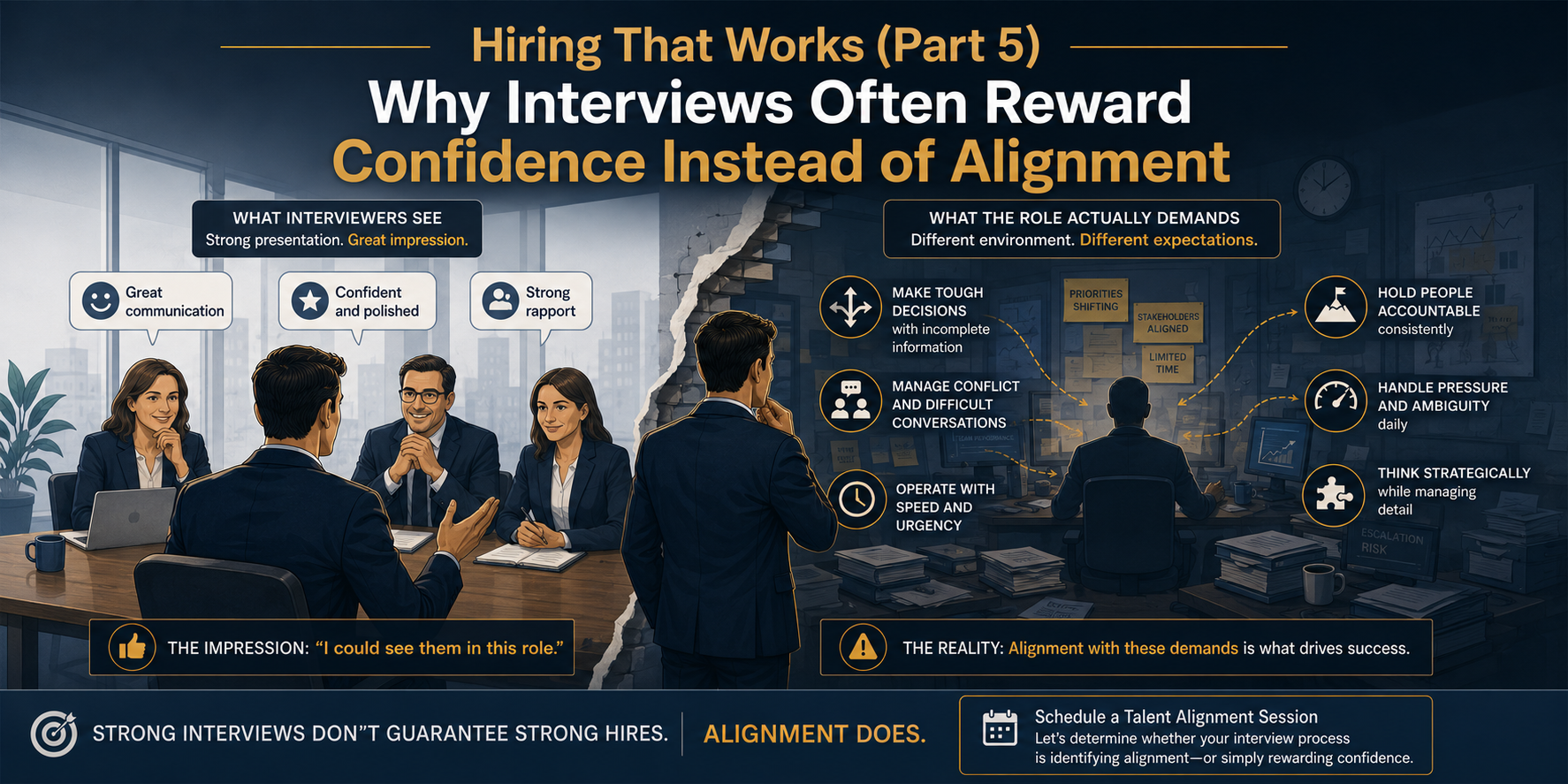
“I could see them in this role.”
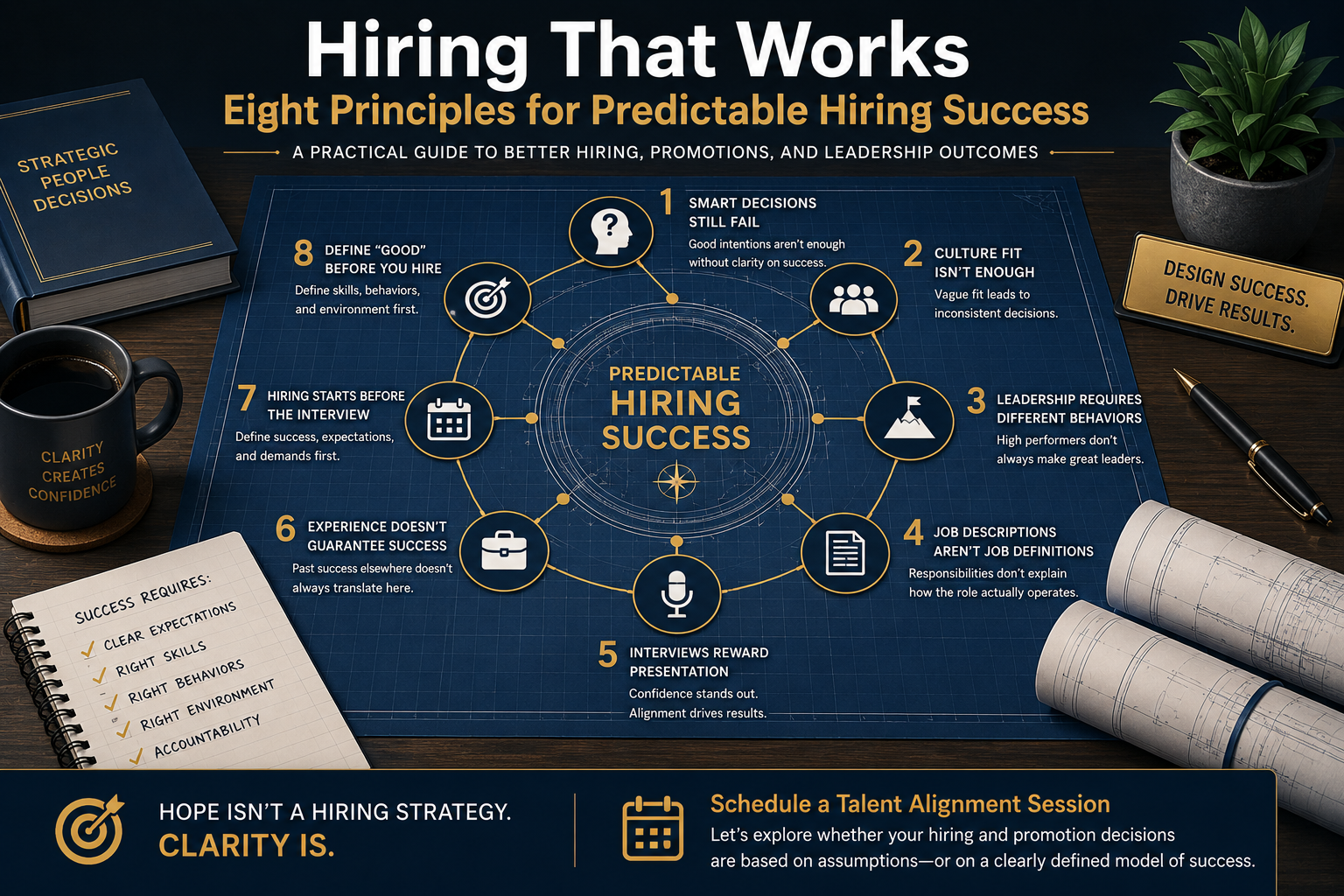
But interviews frequently reward something other than alignment.
They reward presentation.
What Interviews Are Good At
Interviews can be useful for evaluating:
- Communication style
- Professional background
- Experience
- General interaction
But they are much less effective at predicting:
- How someone handles pressure
- How they make decisions
- How independently they operate
- How they manage conflict
- How they respond when expectations become unclear
Those are the things that determine long-term success.
Where Hiring Decisions Drift
Without clearly defined behavioral expectations, interviews often default to:
- Personality preference
- Confidence
- Similarity
- “Good energy”
- Strong communication
None of those guarantee alignment with the actual role.
And in some cases, the strongest interviewers are simply the most practiced at interviewing.
The Problem Leaders Experience Later
This usually doesn’t become visible immediately.
Early on, the hire may appear:
- Engaged
- Polished
- Motivated
But over time:
- Decision-making slows
- Accountability weakens
- Friction increases
- The team experiences inconsistency
The issue isn’t always capability.
It’s that the interview evaluated the person…
But not the actual demands of the role.
Why This Happens So Often
Most interviews are built around:
- Resume review
- Past experience
- General questions
- Personal impressions
Very few are built around:
- Defined role behaviors
- Operational expectations
- Leadership demands
- Real pressure points inside the role
So hiring decisions become subjective.
Even when the process feels structured.
What Strong Organizations Do Differently
Before interviewing, they define:
- What success actually requires
- How the role needs to operate
- Where pressure will occur
- What behaviors predict effectiveness
Then interviews become more focused.
Not:
“Do we like this person?”
But:
“Does this person align with what the role actually requires?”
That changes the quality of the decision entirely.
A Better Way to Think About Interviews
Interviews shouldn’t just evaluate whether someone can perform.
They should evaluate:
- How they operate
- How they respond under pressure
- How they make decisions
- How they interact within the real demands of the role
Without that clarity, confidence can easily be mistaken for alignment.
What Comes Next
In Part 6:
Why organizations often hire for experience – but struggle because the environment itself isn’t designed for success.
📅 [Schedule a Talent Alignment Session]
Let’s determine whether your interview process is identifying alignment – or simply rewarding confidence.