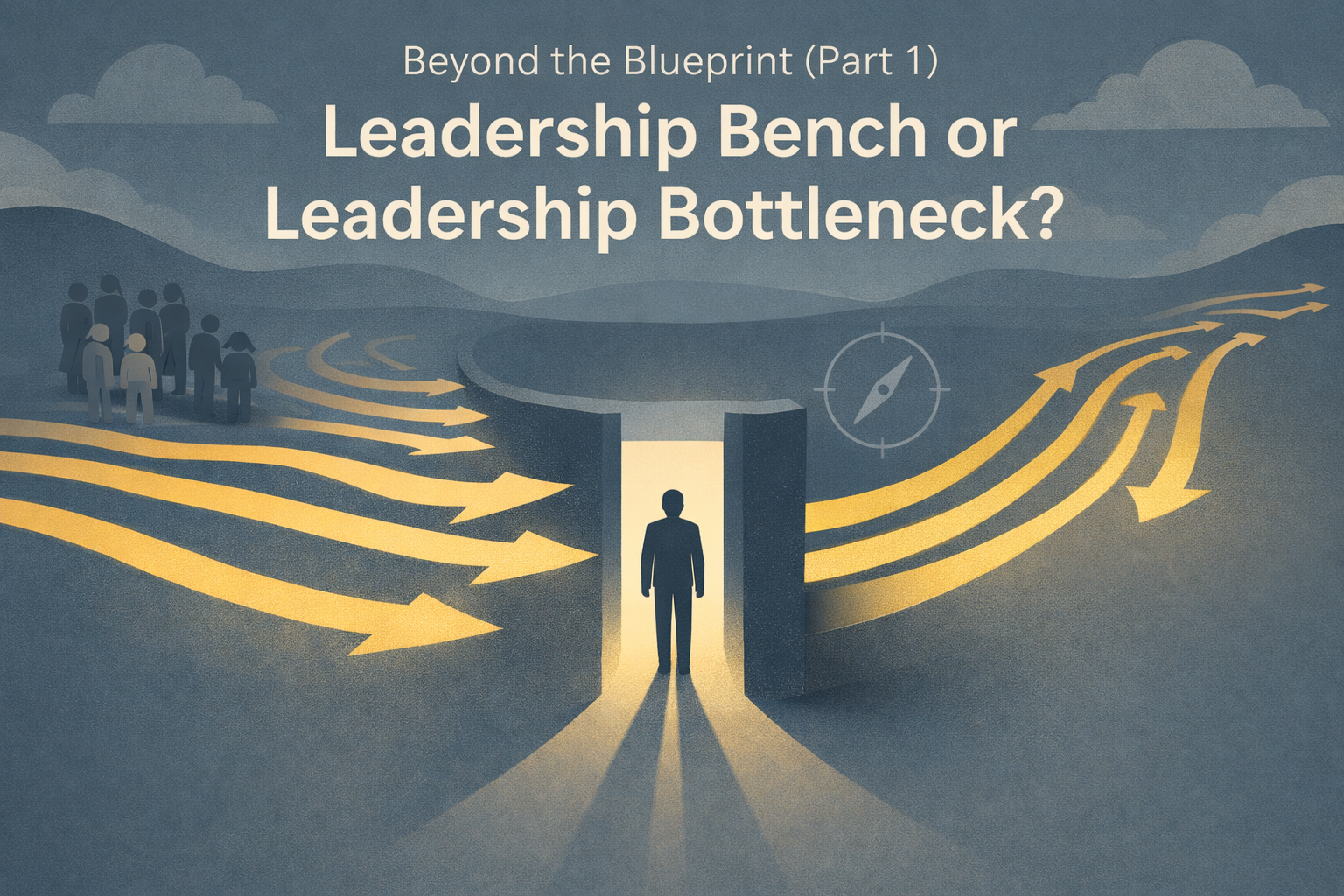
Most leadership teams don’t think they have a leadership bench problem.
They think they have:
But once the fires are out and the business still feels heavy, one pattern shows up almost every time:
The same few leaders are carrying everything.
The Symptom Leaders Feel (But Rarely Name)
It usually looks like this:
-
Decisions still funnel up to the same people
-
Progress slows when one leader is unavailable
-
Delegation happens, but authority doesn’t
-
“High-potential” leaders stay stuck in execution mode
On paper, the org chart looks fine.
In practice, the system is strained.
That’s not a motivation issue.
It’s not an effort issue.
It’s a leadership bench issue.
The Quiet Misconception
Many organizations assume leadership capacity will develop naturally as they grow.
But growth increases:
-
Complexity faster than capability
-
Decisions faster than confidence
-
Risk faster than readiness
Promoting reliable performers doesn’t automatically create leaders with decision authority, judgment, and accountability.
When that gap exists, the business compensates by leaning harder on the same people – until they become the bottleneck.
What a Real Leadership Bench Actually Means
A true leadership bench isn’t about titles or headcount.
It means:
-
Decisions move without escalation
-
Accountability travels with authority
-
Leaders know what they own – and how success is measured
-
The business keeps moving even when key leaders step away
In other words, leadership capacity is designed, not assumed.
What Breaks When the Bench Is Thin
When leadership capacity is concentrated instead of distributed:
The business may still perform – but it does so inefficiently and expensively.
Leadership Takeaway
A strong leadership bench isn’t about more leaders.
It’s about having the right leadership capacity in the right places before you need it.
That’s how organizations move from stabilizing the business to strengthening it.
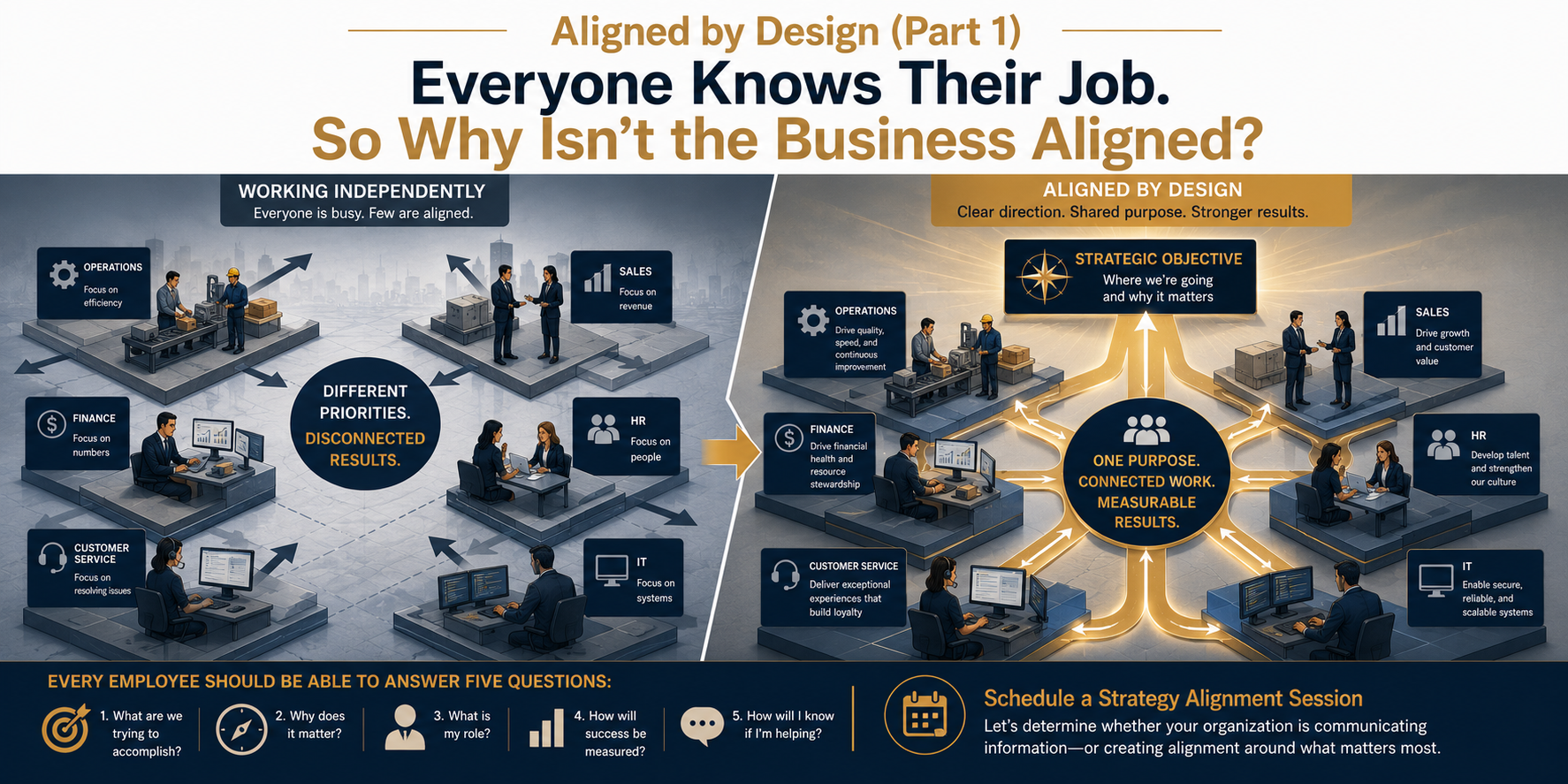
📅 [Schedule a Strategy Alignment Session]
Let’s talk about strengthening leadership capacity before it becomes a bottleneck:
Up next: What happens when pressure hits — and why some organizations bend while others break.