Most leadership teams spend considerable time defining strategy.
They establish priorities.
They set annual objectives.
They create budgets and initiatives.
Then they communicate those goals to the organization.
And assume everyone is moving in the same direction.
Unfortunately, strategy doesn't work that way.
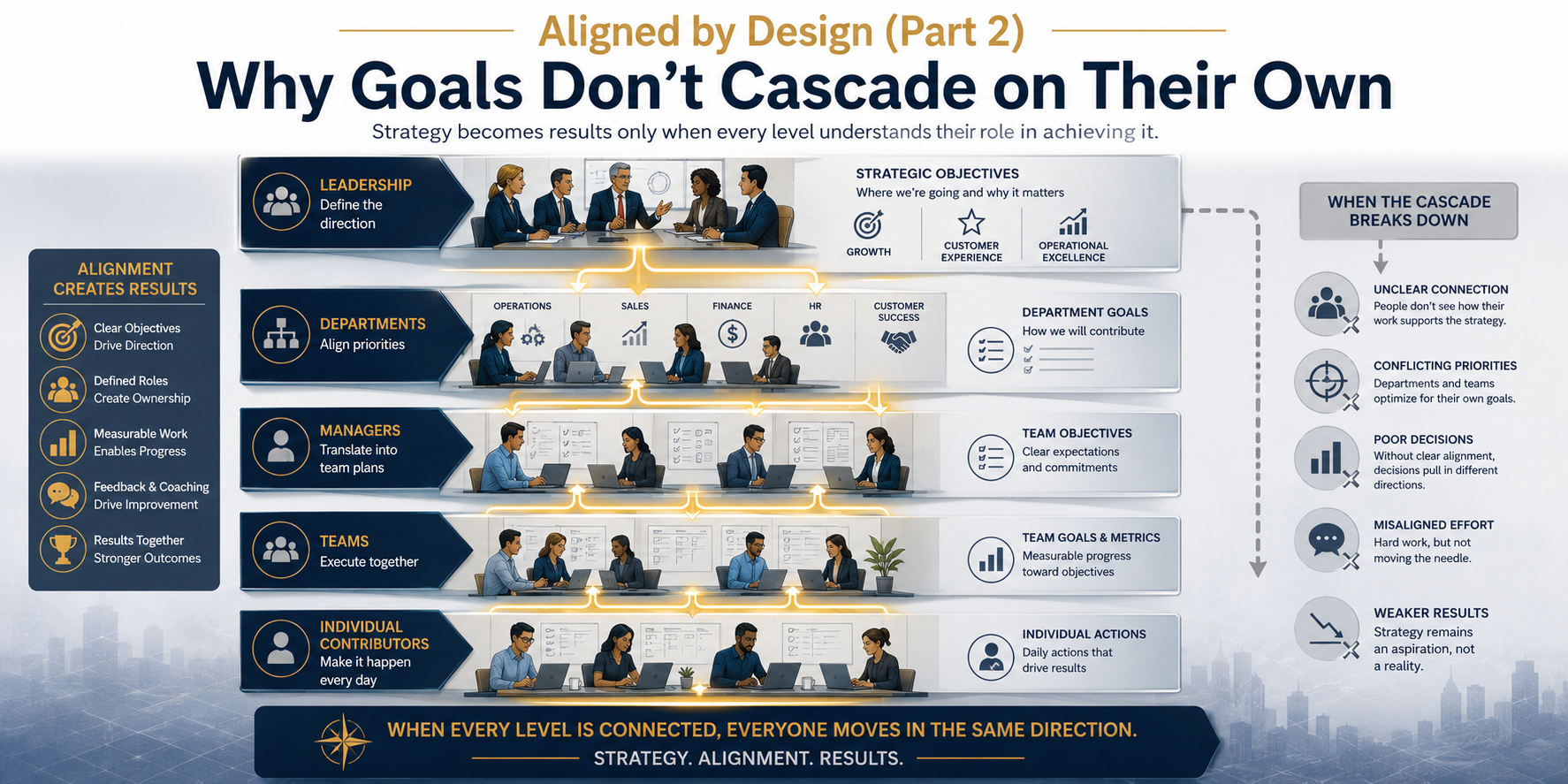
Understanding Isn't Alignment
When employees hear the company's goals, many understand them.
But understanding a goal isn't the same as knowing:
- How their work contributes.
- What should change.
- Which decisions they should make differently.
- What success looks like for their role.
Without those connections, strategic objectives remain executive objectives.
Not organizational objectives.
The Missing Link
Organizations often communicate:
What we're trying to accomplish.
But they spend much less time defining:
- What each team owns.
- What each role contributes.
- Which measures indicate progress.
- How priorities affect daily decisions.
That's where alignment begins.
What Great Organizations Do
Strong organizations intentionally connect strategy to execution.
They help every employee answer:
- Which strategic objective does my work support?
- How will I know I'm succeeding?
- What should I stop doing?
- Who depends on my results?
- What decisions am I empowered to make?
Those answers don't happen by accident.
They're designed.
When Goals Truly Cascade
When strategy is translated into clear expectations:
- Departments stop competing for priorities.
- Teams understand how their work fits together.
- Managers coach against common objectives.
- Performance measures reinforce the strategy.
Execution becomes much more consistent because everyone is pulling in the same direction.
Final Thought
Most organizations don't fail because they lack goals.
They struggle because goals were never translated into meaningful work for every level of the organization.
Alignment isn't achieved when everyone hears the strategy.
It's achieved when everyone understands their role in delivering it.
Coming Next
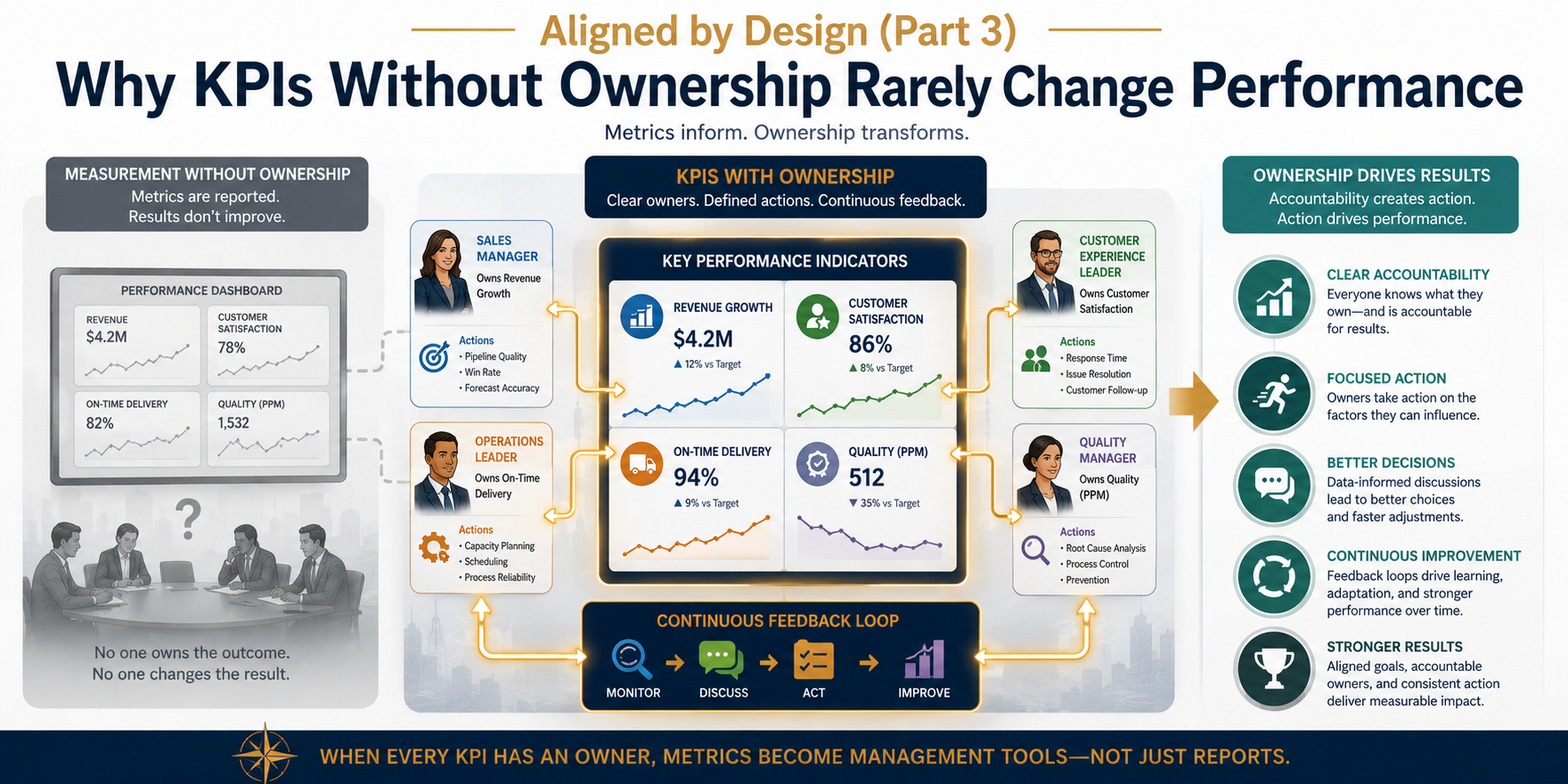
Part 3: Why KPIs Without Ownership Rarely Change Performance
📅 [Schedule a Strategy Alignment Session]
Let's determine whether your strategic priorities have truly cascaded throughout your organization – or whether they're still living at the leadership level.