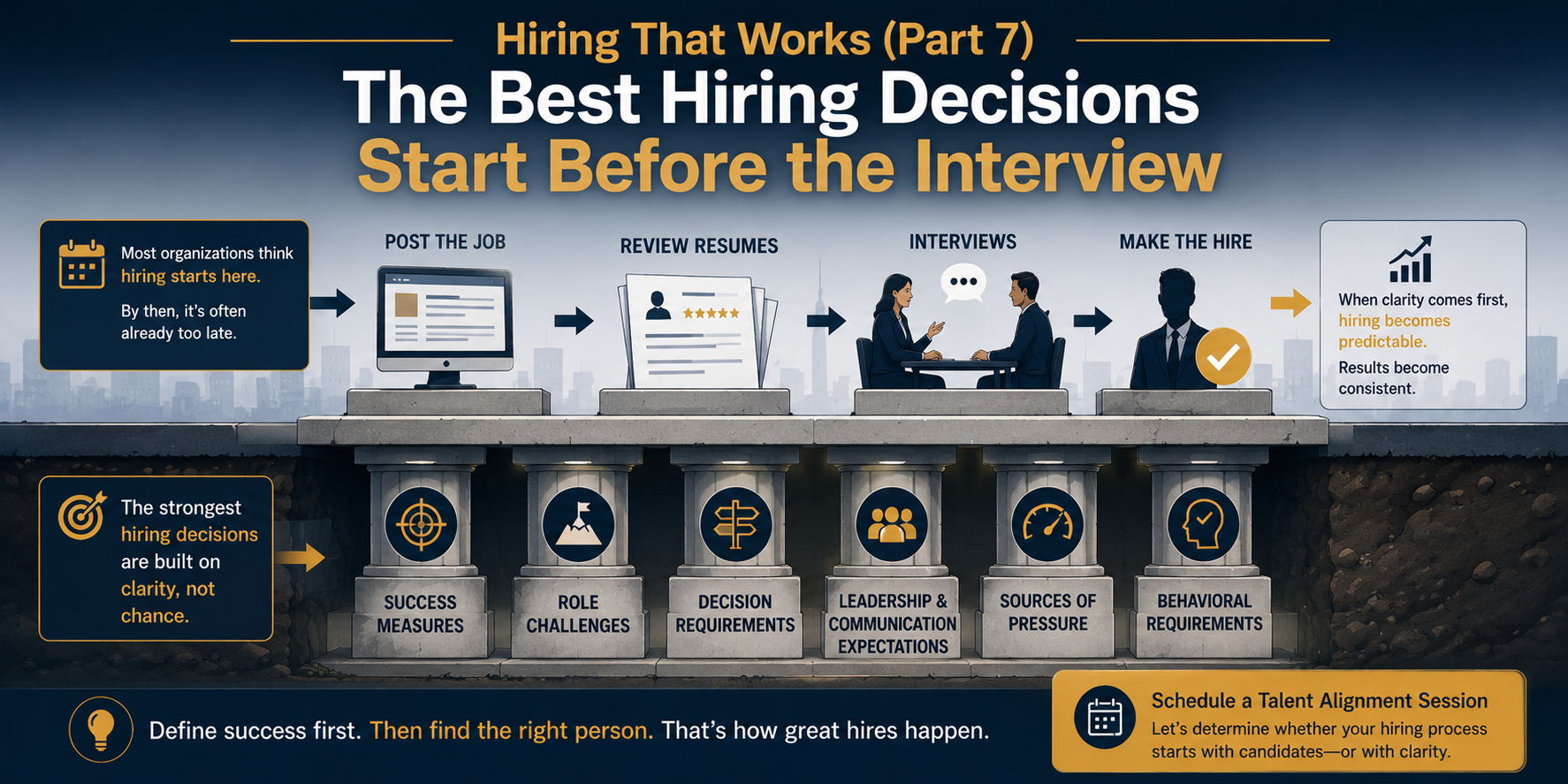
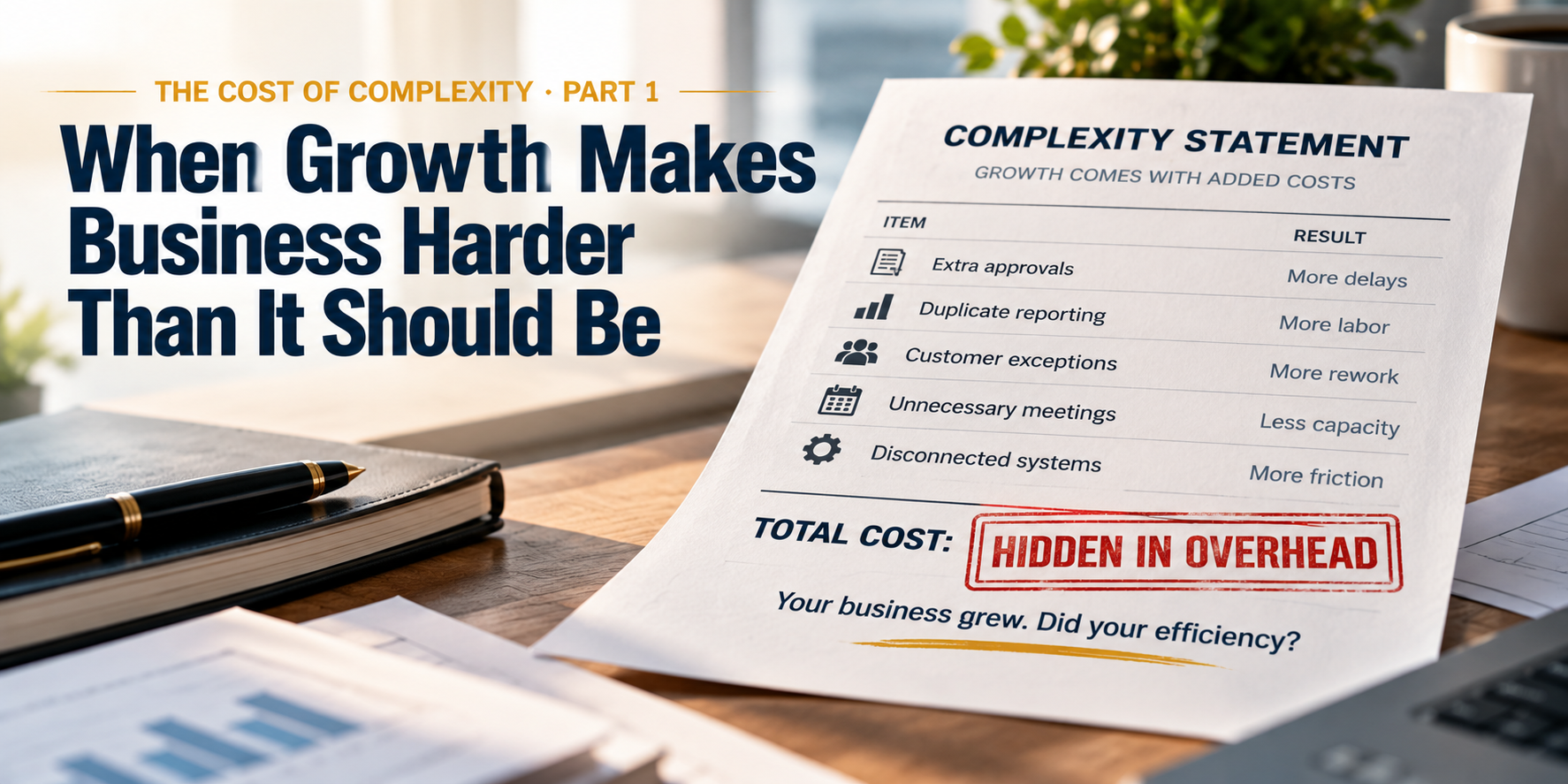
Most organizations believe hiring starts when they post a job.
It doesn't.
By the time a position is posted, many of the most important hiring decisions have already been made – or missed.
Where Hiring Really Begins
Long before the first resume arrives, leaders should be asking:
- What does success actually look like?
- What challenges will this role face?
- How will decisions be made?
- What behaviors will determine success?
Most organizations skip these questions.
Instead, they jump straight to finding candidates.
The Cost of Starting Too Late
When hiring begins with resumes instead of clarity:
- Interviews become subjective
- Expectations shift after the hire
- Managers evaluate candidates differently
- Teams experience inconsistent results
The problem isn't the candidate pool.
The problem is that nobody agreed on what success looks like.
Why Great Candidates Still Fail
Two highly qualified candidates can produce dramatically different outcomes.
Not because one is better.
Because one aligns with the actual demands of the role.
The other aligns with the job description.
Those aren't always the same thing.
What Strong Organizations Do First
Before they interview anyone, they define:
- Success measures
- Decision requirements
- Leadership expectations
- Communication demands
- Sources of pressure
- Behavioral requirements
Only then do they evaluate candidates.
This changes hiring from a guessing exercise into a strategic decision.
A Better Way to Think About Hiring
Most organizations spend enormous energy evaluating candidates.
Very few spend enough time defining the role.
Yet role clarity is often the difference between:
- A strong hire and a disappointing one
- A successful promotion and a failed transition
- Consistent performance and constant frustration
The Real Question
Before asking:
"Who should we hire?"
Ask:
"What exactly does success require?"
That answer should guide everything that follows.
What Comes Next
In Part 8:
What "Good" Actually Looks Like: Why Top Organizations Define Behavioral Success Before Hiring
📅 [Schedule a Talent Alignment Session]
Let's determine whether your hiring process starts with candidates – or with clarity.