Experience matters.
Most organizations look for it.
Most job postings require it.
Most hiring decisions prioritize it.
And for good reason.
Experience can reduce risk.
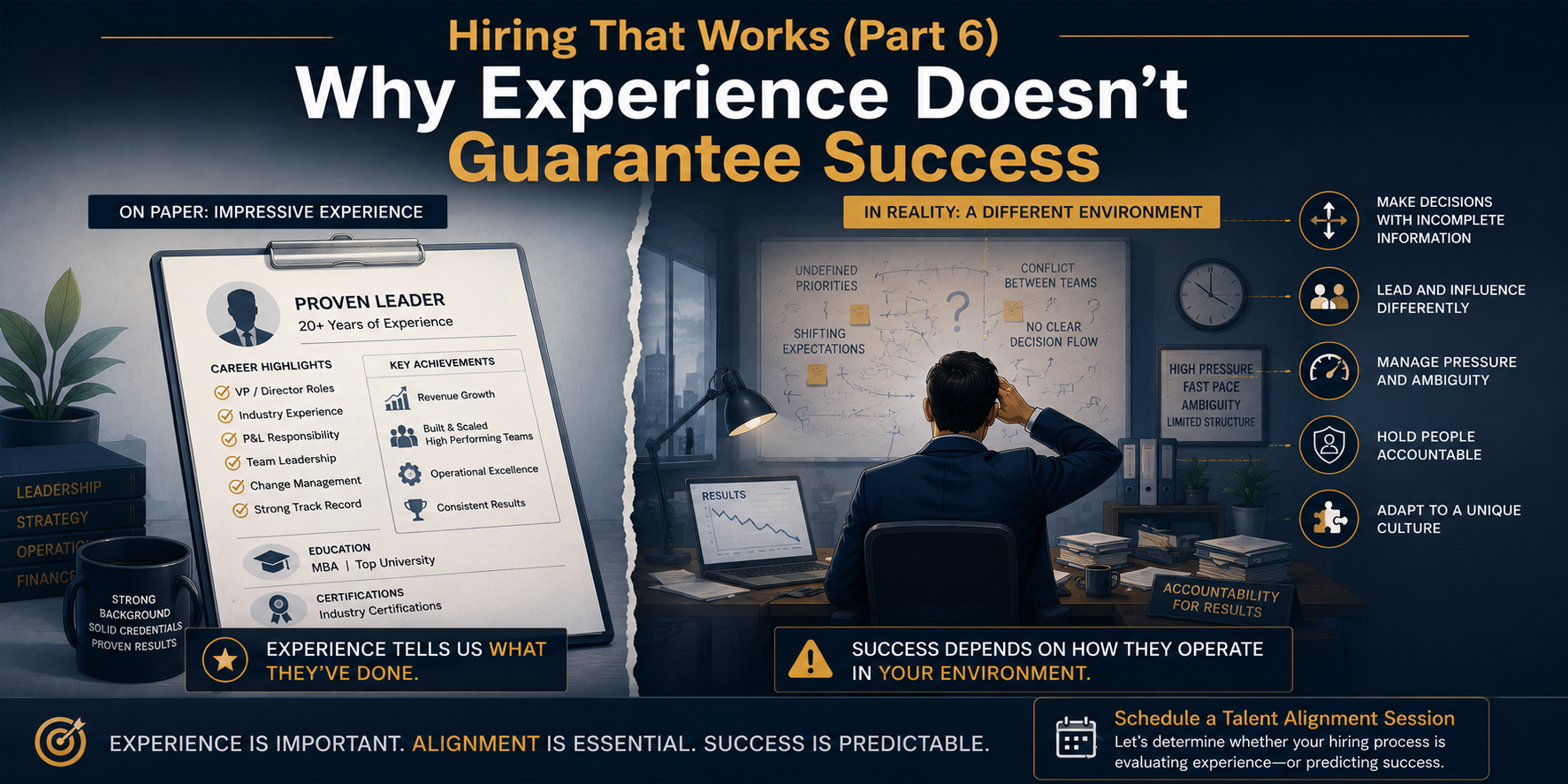
But experience alone doesn't predict success.
The Assumption
Many hiring decisions start with a simple belief:
If they've done it before, they'll succeed here.
Sometimes that's true.
But every organization has:
- Different expectations
- Different decision-making processes
- Different leadership styles
- Different levels of structure
- Different cultural realities
Success in one environment doesn't automatically transfer to another.
What Leaders Often Discover
The candidate looked perfect on paper.
They had:
- The right title
- The right industry experience
- The right credentials
Yet months later:
- Results are inconsistent
- The team isn't responding
- Decisions aren't happening
- Accountability feels weak
The experience was real.
The alignment wasn't.
Why This Happens
Experience tells you what someone has done.
It doesn't tell you:
- How they make decisions
- How they handle pressure
- How independently they operate
- How they navigate ambiguity
- How they lead others
Those factors often determine success more than experience itself.
The Hidden Risk
Organizations frequently hire:
For experience
When they should also evaluate:
For environment fit
A person can be highly successful in:
- A structured organization
And struggle in:
- A fast-moving entrepreneurial environment
Or vice versa.
Not because they're incapable.
Because the environment requires different behaviors.
What Strong Organizations Do Differently
Before evaluating candidates, they define:
- What success looks like
- What pressures exist in the role
- What behaviors are required
- What type of environment the role operates within
Only then do they evaluate experience.
Experience becomes part of the equation.
Not the entire equation.
A Better Way to Think About It
The goal isn't to hire the most experienced person.
The goal is to hire the person most likely to succeed in your environment.
Those aren't always the same thing.
What Comes Next
In Part 7:
Why the best hiring decisions start long before the interview begins.
📅 [Schedule a Talent Alignment Session]
Let's determine whether your hiring process is evaluating experience - or predicting success.